ShakurHasDied

  • Subscribe to our RSS feed.
  • Twitter
  • StumbleUpon
  • Reddit
  • Facebook
  • Digg
Showing posts with label arsenic. Show all posts

Tuesday, July 5, 2011

Playing Chicken with Arsenic

Posted on 9:01 PM by Unknown
by Deborah Blum

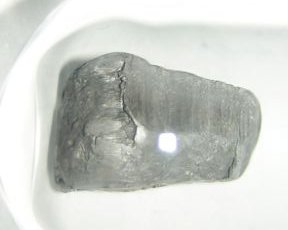
If I were to pick an element that just about everyone recognizes as a poison, it would be arsenic (As). As a crumbly compound called “white” arsenic or arsensic trioxide (AsO3) it became so popular as a 19th century homicidal weapon – think Mary Ann Cotton and her 20 or so victims - that it eventually earned the nickname “inheritance powder.”

Its murderous qualities have given it a starring role in successful plays or movies (Arsenic and Old Lace), in best-selling stories of murder and betrayal, such as Dorothy Sayer’s 1930 crime classic, Strong Poison, or the more recent best seller, A Reliable Wife, with its wonderfully clinical descriptions of chronic poisoning symptoms.

In fact, a person can survive low-level arsenic poisoning for quite some time. But because of the way it damages cells – breaking apart the structures that allow cellular respiration - it turns out to be a quite dangerous carcinogen.* This has been demonstrated, especially, in countries where elemental arsenic permeates rocks at high levels and seeps into ground water. In Bangladesh, for instance, a program of well-drilling begun in the 1970s, literally created an epidemic of arsenic-related cancers.

And yet, for more than 60 years, the federal regulators have approved arsenic additives to poultry feed in the United States, partly to control parasites and partly because they chemically improve the appearance of packaged chicken and turkey parts, pinking them up for consumer approval. Those of us who prefer less obviously toxic material in our chicken buckets – and this includes me – have been advocating that we rethink this policy.

At the time, I wasn’t really expecting much to change. But as it turns out, the pharmaceutical company Pfizer, which makes the arsenic-laced additive roxarsone, has decided to suspend its sales. Why, you wonder, after all this time? It turns out that the industry argument for keeping the compound into chicken feed was that it was a better form of arsenic, not the ever-evil inorganic white arsenic, but a less toxic material rather tidily bound up with carbon (so, in this version, an organic compound) and hydrogen.

In fact, organic arsenic is definitely less hazardous than its inorganic (carbon-free) cousin. But tests now indicate that it may convert to the more lethal inorganic form as chickens and other fowl metabolize the compound. We know this because the U.S. Food and Drug Administration stepped up and ran some very nicely controlled tests showing that the bodies of birds that ate roxarsone-loaded food were consistently higher in white arsenic than those that ate feed without the additive.

As a result, Pfizer–or more specifically, its subsidiary, Alpharma, will suspend sales of roxarsone in 30 days while further tests are conducted. You’ll notice that no one is acting as if this is a major health emergency–which it isn’t. These are tiny levels of arsenic. Still–there’s a common sense health issue here–it’s always better with a metallic poison like arsenic to keep exposure to a minimum because it tends to stay in the body and could eventually add up to something more troubling.

Also, as it turns out, due to such additives poultry farms have been leaching out arsenic-contaminated wastes. The advocacy position has not been panicky, but it has been–rightly, I think–that this represents the unnecessary addition of a famed poison to the food supply.

So it’s gratifying to see the system work–or at least start to work–toward eliminating this particular additive. The FDA ran the appropriate tests; the pharmaceutical company responded as it should. The New York Times, however, pointed out that it could well be a rare triumph given our current political direction: The roxarsone study is a triumph for agency scientists but one unlikely to be repeated very often. The agency asked for $183 million in additional funds for food safety efforts next year, but House Republicans have instead proposed cutting $87 million.

Not that the House Republicans have ever listened to me, but my vote is for restoring those funds. Not to sound radical here but we need more research to help us navigate the world of industrial chemicals. Not less. And my vote is also that roxarsone stays off the market. Again, not to sound radical, but we need less arsenic in our diets. Not more.

Arsenic is so destructive that, in fact, researchers are considering several different mechanisms for the way it might cause cancer. It may create further destruction by generating reactive oxygen molecules. There’s some suggestion that it inhibits DNA repair enzymes. There may be other damaging pathways. All of which reminds us to approach with caution.

Poultry Farm photo credit  
Read More
Posted in arsenic, Deborah Blum, Deborah Blum's posts, FDA, Pfizer, poultry farms, Roxarsone | No comments

Wednesday, May 4, 2011

A Tribute to a Long-Lost Child

Posted on 9:01 PM by Unknown
by Deborah Blum

When I was researching my book, The Poisoner's Handbook, I started by making a list of famous homicidal poisons: cyanide and strychnine, arsenic and antimony. The resulting catalog quickly outgrew my plans for a book of relatively modest length. How would I decide which toxic substances belonged in my particular handbook?

Since my story was of two somewhat renegade scientists trying to establish - or more accurately, invent - the profession of forensic toxicology in Prohibition-era New York, I started researching poison homicides in that time period. I focused on murders from about 1918 to 1935 in that remarkable city. I wasn't looking for famous cases - it was murder as a fact of everyday life that interested me. Those small, slipped-away stories, the cases that haunted me, the lives altered that I couldn't forget, ended up defining my poisonous history of early 20th century America.

And that's why the chapter on arsenic began with a long-forgotten mass murder:

The weather, that summer of 1922, held steady at what the newspapers like to call “fair”, the skies a gas-flame blue, the temperatures hovering near 80 degrees. On the last day of July, as Lillian Goetz’s mother would forever recall, the morning was another warm one. She offered to make her daughter a box lunch, but Lillian refused. It was too hot to eat much; she’d just grab a quick sandwich at a lunch counter.

The 17-year-old daughter worked as a stenographer in a dress goods firm, occupying a small set of offices in the Townsend Building, at the bustling corner of 25th and Broadway. There were plenty of quick eateries nearby, tucked among the offices and shops and small hotels. Lillian, like many of her co-workers, often just stepped over to Shelbourne Restaurant and Bakery, just a half block south on Broadway.

The Shelbourne catered to the office trade, opening in the morning, closing in the early afternoon. Stenographers and secretaries in their bright summer hats and stylish short skirts, businessmen and office managers in their dark tailored suits crowded daily along its wooden counters and small square tables, hurrying through a meal of coffee, hot soup with fresh-baked rolls, sandwiches, and slices of the bakery’s renowned peach cake and berry pie.

According to police reports, on July 31, Lillian ordered a tongue sandwich, coffee, and a slice of huckleberry pie. It was the pie that killed her.

Five other people died as well and more than 60 went to the hospital that day. The scream of ambulances down Broadway was so constant that people called the police department thinking the city had caught fire. The lead suspect - although he would never be charged - was a baker at the Shelbourne, who'd caught a false rumor that he was about to be fired.

Arsenic, at the time, was remarkably easy to acquire. It was used in popular rodent poisons (my favorite had the very direct name Rough on Rats). It was used as a tonic, in brands such as Fowler's Solution. It was beloved by poison murderers because it was odorless and mostly tasteless. In a white powdery form, like arsenic trioxide, it folded almost invisibly into pastry dough.

Today, thanks to improved regulations, arsenic cannot be so casually acquired. Nor is it in the same homicidal demand. Forensic toxicology has made arsenic far too detectable a means of death. It's been identifiable in a corpse for well over 100 years, these days, in the barest trace amounts. And as a metallic element, it remains in the body (notably in the hair) for centuries. It serves, in fact, as a indelible marker of murder.

The fascinating, twisted story of arsenic then was an obvious choice for my book. The tale of little Lillian Goetz maybe less so. But there was this moment of heartbreak that just stayed with me. I read countless news stories about the Shelbourne killer. There's a moment, in one of them, in which her mother, Anna Goetz, is talking to the police about that rejected box lunch, caught at that point in which she knows, she's sure, that she could saved her daughter's life if she'd only insisted on that homemade meal.

Oh, I could see myself - the working mother of two boys - caught in that same moment, replaying that loop in which I might have rescued my child, could have kept her alive, kept him alive, if I'd only done things differently. One of the tasks that I'd set for myself in the book was - despite my real fascination with the wicked chemistry of poisons - to never glorify the subject. Poisoners represent human evil in my story. A lost child like Lillian reminds us of that, should remind us of that.

Still, when I received an e-mail recently with the subject line "Lillian Goetz", I had a moment where I worried that someone in the family didn't agree with me. In that, I was wonderfully wrong. The message came from Lillian's nephew Steve Goetz, a physiology teacher, and he wrote: When I began the chapter in your book covering arsenic, I was amazed to see Lillian Goetz's story featured. I had never realized that her death was a part of such a large and publicized event. Lillian was my aunt, my father Nelson's older sister. Her death by poison was rarely mentioned in the family, and most of the details were vague.

But though they rarely spoke of her, she was always there, a ghost in the house. Her death rewrote the way they lived. Steve was born in 1943 at Bronx Hospital, the facility that treated the dying girl: When my Grandfather, Lillian's father William Goetz, visited my mother who had given birth to me in 1943 at Bronx Hospital, he told her how very sad he felt revisiting the place. After Lillian's death, her parents (William and Annie) discarded all religious items in their house and were non-observant Jews from that point on. My grandmother Annie rarely left her apartment as long as I knew her, and my 98 year old mother told me the other day that that was also true since at least the early 1930's, when she first met Annie.

Steve also sent me the photograph that I've put at the top of this post. His grandmother, Annie Goetz is in the middle, with a very young Lillian holding one hand and her brother Nelson (Steve's father) holding the other. He even sent an image of the back of the photo, all names carefully written in that lovely cursive handwriting of the past with its lacy capital letters.

I've found myself studying their serious faces, taken during an era when people so rarely smiled for photographs. I've pondered Lillian's sober little face under that white hat, imagined her growing up into a dedicated, responsible young woman. But I know that doesn't really do her justice.

I wrote back to Steve Goetz, asking him if I could share the photo and family information and he answered me in the kindest way: "I had rarely thought about Lillian for most of my life - she seemed to be such a distant figure. I want to thank you for bringing her to life for me as a real person, in a way she had never existed for me before. My only tenuous link to her is her copy of the Rubaiyat of Omar Khayyam, which I've had for many years. It contains a bookmark, a cut-out yellowed newspaper column called Our Rhyming Optimist. Aline Michaelis published 6 poems a week for her column from 1917 for the next 17 years. The poem Lillian saved is called "You Have Come Back."

Since I learned about, and was given the book, I've been intrigued that my aunt, coming from a family that seemed not to place a high priority on education or reading, should have this book of poetry. I've always felt that she must have been an interesting and sensitive person, that I would have liked to have gotten to know."

So this one's for you, Lillian. In remembrance, and regret. And a wish that you'd never ended up in my book.
Read More
Posted in arsenic, Debora Blum's posts, Lillian Getz, poisoning, The Poisoner's Handbook | No comments

Thursday, March 3, 2011

How to Poison a Small Country

Posted on 9:01 PM by Unknown
by Deborah Blum

Late last year, the news service Reuters reported a story with the headline "Prenatal Arsenic Exposure Quadruples Infant Death Risk." As the opening paragraph further explains, if pregnant women are exposed to high levels of arsenic, their babies are more likely to die in the first year than "infants whose mothers had the least exposure to the toxic mineral."

At first look, this might appear to be one of the world's most obvious findings. The element arsenic is one of the oldest known naturally-occurring poisons on Earth, found scattered through rocky beds of minerals around the place. It was reportedly identified by the Roman Catholic scholar and alchemist Albertus Magnus (also known as St. Albert the Great) in 1250 and almost immediately recognized for its homicidal potential.

The murderous Borgia family, of 15th century Italy, was notorious for its ruthless use of arsenic to eliminate enemies, but the Borgias weren't alone in recognizing its potential. Arsenic was so commonly used to remove unwanted relatives during the 18th and 19th centuries that it was nicknamed "the inheritance powder." A metallic element, arsenic kills by disrupting cellular metabolism to such a degree that it can literally poison every cell in the body. The body stores arsenic in tissues (bioaccumulation), meaning that it is dangerous both in acute and chronic exposures.

There's no surprise–and one might think, no news value–in the fact that prenatal arsenic exposure might pose a serious health risk. Except that this finding doesn't derive from one more neatly controlled laboratory study. It comes from what I'm going to call a living experiment, in which the test subjects turn out to be human beings and those statistics about infant risk are actually based on tallying up dead children.

To explain: During the 1970s, international aid agencies came up with what seemed like a brilliant plan to stem a plague of water-borne illnesses in the Asian country of Bangladesh. Cholera, typhoid, dysentery were killing citizens by the thousand. As the pathogens responsible lived in surface water, public health officials decided the answer lay in cleaner supplies underground. Aid organizations joined together to install wells in disease-troubled villages, reaching down into the germ-free ground water below. They chose simple, relatively inexpensive tube wells, placed thousands of these over-sized drinking straws into the shallow aquifers.

At first, it seemed to work like a blessing. Infant mortality rates dropped by 50 percent as the rate of water-borne diseases dropped. But by the mid-1990s, a strange epidemic of other illnesses began to appear–some symptoms rather like cholera (lethargy, severe stomach pain, nausea and diarrhea), but others wickedly their own: such as a roughening and darkening of skin, a corrosion appearance of lesions on hands and feet:

Arsenic poisoning in Bangladesh
In fact, as a team of researchers from adjacent India concluded in 1995, these were classic symptoms of arsenic poisoning. As it turned out, no one had done a good geological survey of the bedrock surrounding the aquifers. And with the best of intentions, the live-saving wells had been drilled into area unusually rich in naturally occurring arsenic.

As an ingredient in the complex recipe that makes up the Earth's crust, arsenic is relatively rare, about 1.5 parts per million over all, and is usually brought to the surface as a waste byproduct of mining other ores. The problem is that it's not distributed evenly around the planet. Arsenic-dense mineral deposits cluster unevenly. To be fair, we often discover them only when illnesses appear; we now can state conclusively that one such region lies beneath the Ganges River Delta, where Bangladesh and the West Bengal province of India come together. Others are known in Thailand, Taiwan, in an underground swath across mainland China, in the Latin American countries of Chile and Argentina, and in states of the American West such as New Mexico and Nevada.

As a result, in Bangladesh, the nice little tube wells drew poison-laced water right into the homes and lives of millions and millions of people. Earlier this year the World Health Organization described the problem in Bangladesh as "the largest mass poisoning of a population in history."

This conclusion was reinforced by a comprehensive report in the British medical Journal, Lancet, which concluded that some 77 million Bangladeshi had been exposed to toxic levels of arsenic and that such exposure was responsible for more than 20 percent of the deaths in a population study group from the region. "The results of this study have important public health implications for arsenic in drinking water," the authors noted, with some understatement.

The use of well water has reduced the deaths from waterborne illness. It hasn't, as hoped, eliminated that problem. The rivers and streams of Bangladesh, too often contaminated by raw sewage, remain carriers of often deadly illnesses. And for this reason, many people living in the country still prefer to use well-water.

And for this reason, Bangladesh now serves a living laboratory for the study of arsenic exposure. The Reuters story is based on a study, "Arsenic Exposure and Risk of Spontaneous Abortion, Stillbirth and Infant Mortality" in last November's issue of the journal Epidemiology. "We observed clear evidence of an association between arsenic exposure and infant mortality," Dr. Anisur Rahman of Uppsala University Hospital in Sweden and colleagues wrote.

Let's call this exposure with a capital E. Some of pregnant women tested had blood arsenic levels above 1,000 micrograms per liter. In the United States, normal levels are considered to be between zero and 15 micrograms per liter. Do you wonder that all did not end well with those pregnancies? As Rahman points out, the mechanism for arsenic-induced infant mortality is not known and that further study might eventually yield some protective treatments for people living in poisonous regions.

But I suspect that these mothers would not have chosen to participate in this accidental experiment, and would far have preferred that we understand arsenic another way. I do appreciate that we try to gain from mistakes, get smarter, do things better. But the poisoning of Bangladesh also makes me appreciate a very old saying attributed to the 12th century French abbot, St. Bernard of Clairvaux: "L'enfer est plein de bonnes volontés et désirs." It translates, roughly, as "the road to hell is paved with good intentions."
Read More
Posted in A Poisoned Passion, Albertus Magnus, arsenic, Bangladesh, Borgia family, Deborah Blum's posts, Reuters, World Health Organization | No comments

Sunday, January 30, 2011

The Poisoner's Handbook

Posted on 9:01 PM by Unknown
By Deborah Blum

 My book, The Poisoner's Handbook, comes out in paperback this week. It was published a year ago, and I had the pleasure of joining Women in Crime Ink as a blogger shortly later.

It's been a wonderful year to be the author of a story about 1920's forensic detectives figuring out how to catch poison killers. The book was named one of the top 100 books of 2010 by Amazon. I've visited more than 15 cities to talk about it, and I am actually booked to continue talking about through October of this year. I do sometimes show up wearing the Victorian poison ring that I purchased in honor of the book.

"Where did women actually get those rings?" my son asked me. "Did they go to the jeweler and ask to see the rings kept under the counter?"

As you may guess, my family and friends worry a little about my ongoing obsession with poison, murder, and the more sinister aspects of chemistry. I'm awfully prone upon hearing the name of a poison - say, mercury - to relate the story of 1920's film star Olive Thomas (Mary Pickford's sister-in-law) who was killed by mercury. And don't get me started on arsenic. My neighbors have promised my husband that they are looking out for him. My husband now drinks his coffee at a distance.

But I continue to find the subject endlessly fascinating. Poisoners themselves, with their devious ways and cold-hearted plotting, tell us a lot about who we are, often at our worst. Poisons themselves are a reminder that we need to navigate with care and knowledge through the chemical world in which we live.

Of course, poisons really are fascinatingly wicked chemical compounds and many of them have fascinating histories as well. In honor of the paperback publication, I thought I'd share with you a few of my favorites:

1. Carbon Monoxide: It’s so beautifully simple (just two atoms--one of carbon, one of oxygen) and so amazingly efficient a killer. There’s a story I tell in the book about a murder syndicate trying to kill an amazingly resilient victim. They try everything from serving him poison alcohol to running over him with a car. But in the end, it’s carbon monoxide that does him in.

2. Arsenic: This used to be the murderer’s poison of poisons, so commonly used in the early 19th century that it was nicknamed the inheritance powder. It’s also the first poison that forensic scientists really figured out how to detect in a corpse. It stays in the body for centuries, which is why we keep digging up historic figures like Napoleon or U.S. President Zachary Taylor to check their remains for poison.

3. Radium: I love the fact that this rare radioactive element used to be considered good for your health. It was mixed into medicines, face creams, and health drinks in the 1920's. People thought of it like a tiny glowing sun that would give them its power. Boy, were they wrong. The two scientists in my book, Charles Norris and Alexander Gettler, proved in 1928 that the bones of people exposed to radium became radioactive, and stayed that way for years.

4. Nicotine: This was the first plant poison that scientists learned to detect in a human body. Just an incredible case in which a French aristocrat and her husband decided to kill her brother for money. They actually stewed up tobacco leaves in a barn to brew a nicotine potion. Their amateur chemical experiments inspired a very determined professional chemist to hunt them down.

5. Chloroform: Developed for surgical anesthesia in the 19th century, this rapidly became a favorite tool of home invasion robbers. If you read newspapers around the turn of the 20th century, they’re full of accounts of people who answered a knock on the door, only to be knocked out by a chloroform soaked rag. One woman woke up to find her hair shaved off, and undoubtedly sold for the lucrative wig trade.

6. Mercury: In its pure state, mercury appears as a bright silver liquid, which scatters into shiny droplets when touched. No wonder it’s nicknamed quicksilver. People used to drink it as a medicine more than 100 years ago. No, they didn’t drop dead. Those silvery balls just slid right through them. Mercury is much more poisonous if it’s mixed with other chemicals and can be absorbed by the body directly. That’s why methylmercury in fish turns out to be so risky a contaminant.

7. Cyanide: One of the most famous of the homicidal poisons and, in my opinion, not a particularly good choice. Yes, it’s amazingly lethal--a teaspoon of the pure stuff can kill in a few minutes. But it’s a violent and obvious death. In early March of last year, in fact, an Ohio doctor was convicted of murder for putting cyanide in his wife’s vitamin supplements.

8. Aconite: A heart-stoppingly, deadly natural poison. It forms in ornamental plants that include the blue-flowering monkshood. The ancient Greeks called it the queen of poisons and considered it so evil that they believed that it derived from the saliva of Cerberus, the three-headed dog guarding the gates of hell.

9. Silver: Swallowing silver nitrate probably won’t kill you, but if you do it long enough it will turn you blue. One of my favorite stories involving a silver bullet concerns the Famous Blue Man of Barnum and Bailey’s Circus who was analyzed by one of the heroes of my book, Alexander Gettler.

10. Thallium: Agatha Christie put this poison at the heart of one of her creepiest mysteries, The Pale Horse, and I looked at it in terms of a murdered family in real life. An element discovered in the 19th century, it’s a perfect homicidal poison. Tasteless and odorless, except for one obvious giveaway, the victim’s hair falls out as a result of the poisoning!

Now that I’ve written this list, I realize I could probably name ten more. But, I don’t want to scare you.
Read More
Posted in aconite, arsenic, carbon monoxide, chloroform, cyanide, Deborah Blum's posts, liquid silver, mercury, nicotine, paperback, poisons, radium, thallium, The Poisoner's Handbook | No comments

Wednesday, November 10, 2010

A Lethal Dose of Water

Posted on 9:01 PM by Unknown
By Deborah Blum

One of the most famous sayings in toxicology is this: The dose makes the poison.

In other words, a milligram of the notorious poison arsenic is unlikely to kill you. Make that 200 milligrams and a cemetery plot awaits. Seems obvious, right? But, what if we're talking about something that is not a poison, a benign substance--say, a drink of cold water? Let's make it really pure water, free of arsenic and any other toxic substances.

If the size of the drink increases enough, for example, if instead of drinking a standard 8-ounce glass of water, you gulp down 160 ounces, then can we call water a poison? Wonderful, healthy water? Absolutely yes.

People have been convicted of homicide in water poisoning cases. Children have died after being punished by parents, or even babysitters, who forced them to drink more than a gallon of water in less than an hour. Athletes have died after gulping down too much water. Fraternity pledges have been killed by water poisoning (also called water intoxication) after hazing events.

A year ago, a jury awarded more than $16 million to the family of a young woman who died of water poisoning after entering a Sacramento radio station contest called "Hold your wee for a Wii." The 28-year-old contestant had been trying to win the game console for her children. She died at home several hours after coming in second in the contest. The jury noted that even callers to the radio show had warned against the stunt.

What happens in a water overdose? The kidneys are overwhelmed by the tidal wave of incoming fluid and cannot cycle the excess away. The cells in the body begin to bloat with excess fluid. Electrolyte balances are disrupted, meaning that normal chemical metabolism falters. Tissues start to swell, most disastrously in the brain. The radio show contest even complained during the show of a blinding headache. A coma follows and, if the imbalances cannot be corrected, then comes death.

So the dose does make the poison rather dramatically in the case of water, changing it from a safe and healthy substance to a lethal one. With a classic poison like arsenic, the point is a little different. Put simply, a person is more likely to survive a low dose than a high one.

I recently read a piece by a physician urging athletes to be careful not to drink too much water when they're rehydrating. He titled his piece "The Balancing Act." But, it's really just another way of saying that the dose makes the poison.
Read More
Posted in arsenic, Deborah Blum's posts, dose makes the poison, toxicology, true crime author, water, water intoxication | No comments

Tuesday, July 13, 2010

Memories of Murder

Posted on 9:01 PM by Unknown
by Deborah Blum

When I was a baby reporter - which is how I think of my early days in journalism - I covered the cop-and-court beat for The Macon Telegraph, a medium-sized paper in a rather stately town in middle Georgia.

At least the reputation was for stateliness and deep Southern history which is something one tends to miss when hanging out at the county courthouse, covering the trials of rapists and murderers. My memories of Macon - aside from very late nights at a downtown bar called The Rookery - tend to be like antique paintings, golden oils featuring dark paneling and desperate faces.

I covered one trial involving two men who had abducted and beaten to death two elderly women. The bodies were found in the woods in an adjacent county. The prosecutor brought one of the skulls into the courtroom so that the jurors could see how a blow had caused dents and chips in the bone.

In the courtroom breaks, I'd hang out with the cops, flirting a little maybe, trading crime gossip the way any beat reporter does. And often in those discussions she would come up, the killer to whom all needed to compared, the worst of the Macon killers, whose murderous trail, laid in the 1950s, still left its shadow.

"I've saved all the stories," one detective told me, and he had. He gave me a sheaf of photocopies, dark and smudgy the way they used to be, with the headlines over-black and the face of Anjette Lyles, framed by her silvered hair, shining on the page. He rubbed a finger over that smiling image, the arsenic-loving serial killer.

I used to think I might one day write a book about her, the homicidal woman whose pretty face still charmed the older police officers in Macon. Anjette Donovan Lyles, born 1925, was arrested in 1958 for killing two husbands, a mother-in-law and a nine-year-old daughter. Sentenced to die in the electric chair, she was found insane and sent to the mental hospital for the criminally insane in Milledgeville, Ga., where she worked in the prison cafeteria until she died of heart failure in 1977.

But the book already exists, called Whisper at the Black Candle, published by Georgia true crime writer Jaclyn Weldon White in 1999. It tracks Anjette Donovan through her troubled first marriage to Ben Lyles Jr. (and his mysterious death), her marriage to Buddy Gabbert (his excruciating death plagued by ulcerated sores on his skin and internal bleeding), the death of Lyle's mother, and eventually of Anjette's little daughter, Marcia.

At the time of the last two murders, Anjette was running a successful restaurant in Macon. The deaths of her husbands had not raised any suspicions, but these did, especially her daughter's death. During her trial, it came out that she'd bought her daughter's coffin two weeks before the little girl died from arsenic-spiked lemonade. After the death, Anjette shocked nurses in the hospital by gathering up her daughter's clothes, saying "Well, she won't need these anymore," and throwing them away. Autopsies found the poison in all four bodies.

There was a time, I believe, when every crime reporter, every serial killer historian in Georgia knew the story of Anjette Lyles. I have an old friend, once a staff writer at the Atlanta Journal Constitution, who, as Mary Kay Andrews, writes wonderfully charming Southern comedies of manners. I stayed with her this spring while touring for my latest book, The Poisoner's Handbook. Two former cop reporters hanging out, and old Georgia killers naturally came up. And Ms. Lyles herself, whose photograph once hung on a wall at the AJC.

"Was she all glamorous?" I asked, seeing in my memory that silvery glimmering face.

"She was a crone," my friend replied flatly.

I kind of liked that, actually. It's just right to hear evidence that prison takes a toll on serial poisoners, turns beautiful, amoral women into hags trapped behind stone.

It strikes me, though, that some murderers are made for haunting. The killings I described, the beating deaths of the old women? Sometimes I'm caught back there, in that over-bright courtroom cluttered with tales of death and bits of broken bone. And Anjette Lyles? If you can believe it, someone has created a Facebook page in her memory.

The first creepy thing is that it plays to her glamour girl side. The second, at least for me, is that when I looked the page, the most recent post was about me and my poison book. It startled me to see it there, made me wonder why. But maybe it's just what I said earlier; some murders stay in our memories. Some killers call up the ghosts.
Read More
Posted in Anjette Lyles, arsenic, Georgia, Mary Kay Andrews, serial killers, The Poisoner's Handbook | No comments

Tuesday, June 22, 2010

Death of a Wonder Horse

Posted on 9:17 PM by Unknown
-
by Deborah Blum

The name Phar Lap comes from an Asian word for lightning; a sky flash. A passing dazzle of light, a spark in the night.

And so he was, the big copper racehorse from Australia, his dazzling speed making him one of those unexpected beacons of hope during the Great Depression who, according to a report published in an international chemistry journal in April, was killed by a massive dose of arsenic.

Of course, no one who follows race horse history could be entirely surprised by that finding. For one thing, it built on preliminary results from 2006. But from the day Phar Lap died in California on April 5, 1932, rumors have circulated and suspicion simmered that he was killed by someone from the gambling syndicates who had invested in other horses.

After all, gamblers in Australia had earlier tried to shoot the big horse.

The Wonder Horse -- one of his many nicknames, along with the Red Terror -- was born in October 1926 in New Zealand and thought to have so little promise that he was purchased as a two-year-old by American businessman David J. Davis for about $130 (US). As the story goes, when the gangly youngster shambled into sight, the new owner was so horrified, he refused to pay to train him. The Australian trainer, Harry Telford, offered to train the colt for free in exchange for eventual part ownership of the horse.

Phar Lap won his first race a year later and, as they say, didn't look back. He'd matured into a beautiful, powerful chestnut with a cheerful disposition and a drive to win. Too much of a winner, some thought. On November 1, 1930, the day of the prestigous Melbourne Stakes, a car started following him on the way back from morning practice and shots -- apparently ordered by a rival owner -- were fired at the big horse. They missed, and no one was ever caught although a furious Davis offered a $100 reward, huge for the time. Phar Lap, though, remained unfazed. And won the race.

In fact, it was one of 14 straight victories that year, followed by 14 straight victories in 1931. In his four-year racing career, Phar Lap ran hard and often and fast. He won 37 of 51 races, and that would include his last.

Davis, by now enamoured of his bargain colt, decided to enter him in an international big prize race, the Agua Caliente Handicap, at a track near Tijuana, Mexico. The purse for the winner of that race would be more than $11,000 (comparable to about $100,000 today). Although Telford was reluctant, Phar Lap was shipped by boat to Mexico. In a hard-fought race, he once again triumphed in a flying finish, still watchable, in fact, in a YouTube video.

Three days later he was dying.

Davis had moved him to a private ranch near Menlo Park, California, while he negotiated for entrance into other lucrative private races. On that morning of April 5, 1932, one of the stablehands found the big horse convulsing in agony. Phar Lap died several hours later. Speculation of deliberate poisoning has followed his story ever since, although alternative theories have been offered -- from severe gastroenteritis to accidental poisoning from the use of pesticides on the ranch.

Phar Lap was such a sweet-natured horse that those who knew him mourned not only the loss of a champion athlete but the loss of a friend. Telford said, "A human being couldn't have had more sense. He was almost human, could do anything but talk ... I loved that horse."

The racehorse was such a hero -- and a martyr -- to fans in Australia and New Zealand that museums from both countries telegraphed to ask for the chance to display the horse. Davis, after consulting with Telford, decided to send Phar Lap's "great" heart to Australia's National Institute of Anatomy in Canberra. The skeleton went to the Dominion Museum in New Zealand. And the hide was sent to the National Museum of Victoria, in Melbourne, where taxidermists labored for four months to create a life-like replica of the Wonder Horse, from his shining red coat to his tousled mane.

In the years since his death, songs have been written to the horse, movies been made about his life story. But it's that mane that eventually solved the mystery of what -- if not who -- killed Phar Lap. Australian researchers removed six hairs and then used a highly specialized x-ray microsope to bombard them with intense radiation, illuminating the chemical makeup of the hair. The analysis (done at Argonne National Laboratory in Illinois) is so precise that it allows scientists to tell whether material was absorbed from the blood or introduced after death, such as through embalming processes.

In the case of Phar Lap, researchers were able to determine that arsenic had been metabolized: the horse had been given a massive dose of arsenic one to two days before he died. Those preliminary results were released a couple years ago. The final report, the official conclusion, was published in April under the title Determination of Arsenic Poisoning and Metabolism in Hair by Synchrotron Radiation: The Case of Phar Lap.

A tidy, scientific way of describing a shameful episode and an example of epically bad sportsmanship. I'm glad that researchers in Australia were so determined to find some answers about the death of Phar Lap, even if it serves only to remind us of the realities of the American horse racing business of the 1930s, with its underpinnings of crooked money and sweaty desperation.

It's not justice, of course. Because Phar Lap deserved so much better. The big copper horse deserved to be more than a fleeting star, a flash in the sky. He deserved a chance to finish his glorious career with a much-petted old age in one of those fabled green pastures ... I hope that whoever came bearing arsenic to the stable in those soft April days of 1932 didn't finish out his own days happy and healthy. The man -- whoever he was -- deserves so much worse.
Read More
Posted in arsenic, Great Depression, horse racing, Phar Lap, poisoning | No comments

Sunday, February 28, 2010

Black-Eyed Borgia

Posted on 2:30 PM by Unknown

by Deborah Blum

Mary Frances Creighton, Fanny to her friends, was a rather appealing 24-year-old in the summer of 1923. She had curling dark hair, pale skin, “deep, luminous eyes,” according to The New York Evening Post, and lush, “petulant lips,” according to The New York American.

The New York Times more sedately described her as a “comely brunette,” or as “a young mother.” She had a three-year-old daughter, Ruth, and a newly born son, John Jr. The baby had been born in the Newark, N.J. jail, while both she and her husband, John, (together, above left) awaited a trial on charges that they’d killed Fanny's young brother with arsenic.

Hence all the publicity. The newspapers ran few photos of scrawny sandy-haired John. But Fanny Creighton willingly posed for admiring photographers: dressed in long-sleeved demure black, despite the summer heat, eyes lowered, carved silver cross hanging around her neck, infant cradled in her arms.

The image was of a gentle Madonna, the least likely person to have killed a younger brother for a life insurance payout.

The jurors also believed her an unlikely murderer. Both the Creightons were found innocent of the charges. But, in fact, although her husband was only a dupe in the affair, Fanny Creighton was guilty. She admitted to the killing a dozen years later. That was after she’d been charged with yet another arsenic murder.

In the second case – the murder of a close friend’s wife on Long Island – Creighton (and the close friend) went to the electric chair. This time, the press did not find her so appealing: “The Black-Eyed Borgia” screamed one headline. And this time the evidence was not so easily brushed away – the forensic results were so precise that the laboratory could identify the brand of arsenic-laced rat poison used – and the guilty decision came very quickly.

The different endings to two prosecutions of the same woman offer a remarkable measure of how much and how fast forensic science had grown up in the intervening decade. Today, we tend to take such scientific expertise for granted. This is not to imply perfection in a human enterprise. We’ve all followed recent scandals involving overworked criminal laboratories that misstated or even made up some of the findings. But that involves people making bad, really bad, decisions. The basic science itself – our ability to tease a poison out of tissue, identify a blood type, analyze traces of fibers or soils – those techniques stand as solid.

That was far from true in the early 20th century. Elected coroners often knew nothing about science or how to determine cause of death. As I learned in researching my book, The Poisoner's Handbook, death certificates from the time period sometimes merely gave “Act of God” as the cause. Police detectives regarded these strangers from laboratories with real suspicion, refusing to accept their findings. And lawyers found laboratory results to be a wonderfully easy target.

All of that worked perfectly to Fanny Creighton’s advantage in her first murder trial: “My clients know nothing of how this boy came to be poisoned!” her lawyer declared.

John Creighton and Mary Frances Avery were long time friends when they married in 1919. He was the son of an executive with the Pennsylvania Railroad Company. She, her brother and two sisters were orphans, cared for by affluent grandparents.

The newlyweds moved in with Creighton's parents, who owned a big, two-story home in Newark’s comfortable Roseville neighborhood. They shared the space for a year until his mother died at age 47 of apparent attack of food poisoning in 1920. His father, also 47, died the following year, of a sudden heart ailment.
 
In the 1920s, a powdery form of arsenic called white arsenic, also known as arsenic trioxide, was mixed into an astonishing array of home products. These included a tonic to improve one’s complexion (Fowler’s solution), prescription medicines, weed killers and pesticides, such as the popular rat poison Rough on Rats, which was 10 percent soot and 90 percent white arsenic. In their analysis of Charles Avery’s body, forensic scientists could easily detect arsenic in the tissues – tests had been available since the mid-19th century – but they were unable to figure out which of these many poisons was responsible.

Fanny Creighton used Fowler's Solution to improve her pale complexion. But as her attorney pointed out, the mixture was so dilute that it would have taken gallons to kill the boy. Avery had access to rat poison at the grocery where he worked. The Creightons' attorney suggested that he might have taken it himself. His sister said he was depressed about a girl. The jury found the poison evidence so inconclusive that they quickly returned a not-guilty verdict. The angry prosecutor – convinced that Fanny, at least, was a murderer - then charged her with using arsenic to kill her mother-in-law. But that case foundered on even thinner scientific results. As Fanny Creighton walked away from the courthouse, she sent the prosecutor a message of forgiveness: “I bear no malice toward anyone.”

After the trial, the Creightons left New Jersey and moved to the small town of Baldwin on Long Island. During the Depression, they rented part of their home to another couple, Everett and Ada Applegate. Fanny had lost her dark Madonna looks by then. But her daughter Ruth was a rather lovely 15-year-old, and Ev Applegate decided he'd much rather be married to Ruth than to Ada, who was both fat and ill-tempered. Ev began sleeping with Ruth on the sly, and he told Fanny that if only he were free, he'd be glad to marry her daughter.

On September 27, 1935, Ada Applegate died of acute gastrointestinal distress. Prompted by an anonymous letter, the police opened and investigation and requested a forensic analysis. This time the tests -- done by New York's star toxicologist Alexander Gettler -- were inarguable. Not only did Gettler find three times the lethal dose of arsenic in Ada Applegate's body, he was able to identify the impurities in the poison as soot -- in fact, the exact proportion of soot found in Rough on Rats. The police traced the purchase of the poison, and Applegate and Creighton admitted to buying it together.

Creighton (left) also admitted, in an interview, that she'd used Rough on Rats to kill her brother. Investigators just hadn't known then how to identify it so precisely. It was such precision -- and a new awareness by police and the public of the science itself -- that changed the way we think about forensic medicine. There also was a very definite message in the end of Mary Frances Creighton's story. 

On July 16, 1936, she and Everett Applegate went to the electric chair at Sing Sing Prison.


Read More
Posted in Alexander Gettler, arsenic, Deborah Blum, Deborah Blum's posts, Fanny Creighton, female serial killer, Historical Crime, poisoning | No comments

Wednesday, February 10, 2010

Jazz Age Science Enters Courtroom

Posted on 10:00 PM by Unknown

by Deborah Blum 

The first week of December 1926 was clouded in fog. The mist lapped along the rivers, muffled the harbors, made eerie the dry creak of boats rubbing against docks in the water. 

Far too early one morning a Brooklyn police officer patrolling along the East River caught a half-glimpse of a man hurrying through the fog.  As the figure neared the edge of a wharf, the officer could see that the man walked slightly bent as he carried a heavy-looking bundle. The patrolman shouted for the man to halt but instead he hastily dropped his burden and kicked it into the river.

The officer called again as the man fled. Together with a hurriedly approaching fellow patrolman, he tackled the fugitive to the ground. But the stranger refused to answer any of their questions. They took him to the station house where, in the sudden brilliance of a lit room, the officers suddenly realized that their captive’s trouser cuffs and socks were sodden with blood. Once they’d pried out his name, they hurried to his apartment.  The kitchen was a scene from a horror movie, complete with bloody cleaver and jagged saw on the table and a woman’s body on the floor.

Half a body, actually. Everything below the waist was missing – and the police now deduced, long lost in the East River.

I’ve had a love-hate reaction to this story ever since I discovered it in the forgotten archives of New York City history. It’s terrible and it’s tragic.  It’s soaked in blood, literally. But it has a really terrific twist at the end. And even more important, it’s a classic story of chemical detective work from a time when forensic science was so new that scientists were a peculiarity in the courtroom.

I’ve been working as a science writer for most of my career, first at newspapers (won a Pulitzer in 1992 for writing about primate research) and as a book author. In the past decade, I’ve published books on the biology of sex differences, on the science of love and affection, and on whether it’s possible to prove life after death. I sound, I know, like someone with a short attention span. Mostly I just like exploring the different ways that science changes our lives, alters our history, explains who we are today.

Of course, when I first started thinking about writing a book about poison and murder it was also because I just found the subject fascinating. I grew up with my mother’s collection of early 20th  century crime fiction: Agatha Christie, Dorothy Sayers, Georgette Heyer, Leslie Ford, all of whom found poison to be the most seductive of murder weapons. I liked the idea of trying to catch some of that seductiveness in a book that would also explain the science of how poisons actually work. 

But it wasn’t until I started looking at the early history of forensics that I found a way to tell the story.  My book, "The Poisoner's Handbook," would become the tale of two forgotten scientists – medical examiner Charles Norris and toxicologist Alexander Gettler -- from early 20th century New York City who helped launch the science of forensics in the United States and also solved some of the most famous murder cases of their time.

The 1920s was a treasure trove of innovative, dangerous chemistry.  There were compounds created by military innovations of the Great War, by industrial applications, research into new medicines, and the speakeasy culture born with Prohibition, with its smoky jazz clubs and dubious cocktails. Morphine went into teething medicines for infants; opium into routinely prescribed sedatives; arsenic was an ingredient in everything from pesticides to cosmetics.

Against that background, early forensic scientists literally had to invent rules of chemical detection as they went.  Alexander Gettler, for instance, wrote the fundamental paper on cyanide (still cited by the EPA), created the first tests that could prove intoxication at time of death, discovered how to detect chloroform levels in the brain of a dead person, and did some of the fundamental work on the still-dangerous gas carbon monoxide and how it kills us.  He’s still mentioned by experts as “the father of forensic toxicology in the United States.”

The twist on that dismembered body story I mentioned earlier comes from work done by both Gettler and his boss, Charles Norris. As it turns out, it’s not so much a story of death by hacksaw as death by poison. The toxic material in question turns out to be the very lethal gas, carbon monoxide.

Norris was the pathologist on duty the night Brooklyn police discovered the partial body of Anna Frederickson in the apartment of Francisco Travia. By the time Norris arrived at the scene, the police had already charged Travia, a longshoreman, with hacking the woman to death. But Norris, after looking at the body, insisted that they were wrong.

The woman’s face and what was left of her body was flushed an odd cherry red. People who bled to death, he pointed out, tended to be waxy pale. He took the half-body back to the morgue at Bellevue for autopsy and sent tissue and blood samples to Gettler.

If you know carbon monoxide, you know it’s characteristic for people poisoned by the gas to be flushed pink, even after death. Carbon monoxide crowds oxygen out of the blood stream. Its chemistry gives it a more effective grip on blood-borne proteins that normally distribute oxygen.  As the blood is saturated with the by-products of carbon monoxide, a unique chemical reaction causes to become a brighter, pinker color.

Not only does the skin of a carbon monoxide victim become strangely rosy but also internal organs are stained a deep cherry-red. This effect is so persistent that carbon monoxide saturated blood will often remain that startling crimson weeks or even months after death.

Before the Travia case, Gettler had run experiments proving that the body cannot absorb carbon monoxide after death. So when tests showed that Travia’s victim had lethal levels of carbon monoxide in her blood, it was obvious that she had to have absorbed those killing levels while still alive. In other words, she was dead of carbon monoxide poisoning before Travia cut her up.

Faced with the evidence, Travia confessed that he and the victim had been drinking (illegally, since this was during Prohibition) that night. Both had passed out and when he awoke, she was dead. Not realizing that his gas stove was leaky, he was afraid that he’d be suspected of murder. So he decided to make the body disappear, cutting it apart and putting the pieces in the river.

The police refused to accept his explanation or the new strange science of forensics. But when Travia went to trial, the jury believed his story. He was found guilty of illegally dismembering a body and sentenced to a year in prison. If convicted of murder, he would have been destined for the electric chair at Sing Sing prison. The chemical detective work of Norris and Gettler saved his life – and would go on to make forensic toxicology an essential part of solving crimes today. 
Read More
Posted in 1920s, Alexander Gettler, arsenic, carbon monoxide, Charles Norris, Deborah Blum's posts, forensics, Guest Contributors, Historical Crime, opium, poisoning, Prohibition | No comments
Older Posts Home
Subscribe to: Posts (Atom)

Popular Posts

  • Milford Memories: A Haunted Park
    by Donna Pendergast Milford Michigan is a sleepy serene village located in a bucolic area of affluent Oakland County Michigan. Despite it...
  • Jane Doe and a Serial Killer?
    by Cathy Scott They tagged the body “Jane Doe” after the discovery in a rustic grave on the desert floor near Florence, Arizona. The dead fe...
  • Serving Life
    by Lisa R. Cohen Two weeks ago I traveled to Louisiana's maximum security Angola State Penitentiary . It was almost exactly two years si...
  • The Extreme Measures Taken to Hide Fingerprints
    by Andrea Campbell John Herbert Dillinger got an extraordinary share of newspaper headlines as a notorious bank robber in the 1930s. His...
  • The Throw Away Child
    by Donna Pendergast It has been often said that a baby is a miracle from heaven. Miracle Jackson was just that. Born in February of 2000, M...
  • Texas-based Crime Writer Pens 2nd Novel
    Steven Long, a Texas-based true-crime author, longtime journalist, and fearless animal activist has covered some of the most important crim...
  • Donna Pendergast opens up for the WCI interview
    By Kathryn Casey Sometimes we take those around us for granted. That shouldn't be, but it's human nature. Then we step back, take a ...
  • The Facebook Fugitives
    by Donna Pendergast Craig " Lazie " Lynch was incarcerated on an aggravated burglary charge at Hollesley Bay Prison in southern ...
  • Keep Him in Prison
    by Kathryn Casey I don't go to my P.O. Box as often as I should. I finally made it over there this past weekend, and to my dismay I disc...
  • How To Stop a Stalker
    by Gina Simmons , Ph.D. Whip-smart, blonde, from a loving family, Peggy enthusiastically prepared for medical school. For the past three ye...

Categories

  • "48 Hours" (1)
  • "Andrea Campbell's posts" (4)
  • 10-year-old cover girl (1)
  • 1920s (2)
  • 1930 (1)
  • 1936 (1)
  • 1938 Food Drug and Cosmetic Act (1)
  • 1966 Pontiac (1)
  • 19th Amendment (1)
  • 2008 Crimes (2)
  • 21 Club (1)
  • 2Pac (1)
  • 48 Hours (1)
  • 9/11 (1)
  • A Descent into Hell (1)
  • A Poisoned Passion (1)
  • a woman scorned (1)
  • a writer's life (1)
  • A.T.S.A (1)
  • Aaron Stinchcombe (1)
  • ABA (1)
  • abbie dorn (1)
  • ABC News (1)
  • ABCs of Conflict Resolution (1)
  • Abductions (1)
  • abuse (4)
  • accident (1)
  • aconite (1)
  • Ada Kepley (1)
  • Addiction (2)
  • advocates (1)
  • AFIS (1)
  • Afraid of the Dark (1)
  • After Etan (4)
  • aggravated robbery (1)
  • AIDS (2)
  • Aileen Wournos (1)
  • airport security (1)
  • Al Sharpton (1)
  • Al Snyder (1)
  • Alabama (2)
  • Alan Berg (1)
  • Alan Dershowitz (1)
  • Albert Fish (1)
  • Albertus Magnus (1)
  • alcohol (1)
  • Alexander Gettler (2)
  • Alexis Valoran Reich (1)
  • Ali Lowitzer (1)
  • Alice Sebold (1)
  • Alice Thomas (1)
  • Alisa Maier (1)
  • Allan Wayne Porter (1)
  • Allegan County Jail (1)
  • AllHipHop.com (1)
  • Alyssa Bustamente (1)
  • Alzheimer's (3)
  • Amanda Knox (7)
  • Amanda Knox movie (1)
  • Amanda Knox trial (1)
  • Amazon (1)
  • Ambassador Hotel (1)
  • Amber Dubois (3)
  • America's Most Wanted (2)
  • American Bar Association (1)
  • American Chemistry Council (1)
  • American Gangster (1)
  • american heroes (1)
  • American Institute of Mediation (1)
  • American Occult (1)
  • American serial killers (1)
  • Ammar Harris (1)
  • Amnesty International (1)
  • Amos Kamil (1)
  • Amtrak (1)
  • Amy Mihaljevic (1)
  • Anderson Cooper (3)
  • Andrea Campbell (8)
  • Andrea Campbell's posts (24)
  • Andrea Campbell’s posts (1)
  • Andrea Campbells posts (7)
  • Andrea Yates (1)
  • Andrew Cunanan (1)
  • Andy Kahan (2)
  • Angel Downs (1)
  • Angel Killer (1)
  • anger issues (1)
  • Angola Prison (3)
  • animal abuse (1)
  • animal crime scenes (1)
  • animal cruelty (1)
  • Animal CSI (1)
  • animal DNA (1)
  • Anita Hill (1)
  • Anjette Lyles (1)
  • Anna Nicole Smith (2)
  • Anne Bremner (10)
  • Anne Bremner posts (3)
  • Anne Bremner's posts (14)
  • Anne Bremners posts (1)
  • Annette Finley-Croswhite (1)
  • Annie McCann (1)
  • Anthony Graves (3)
  • Anthony Lazzarro (1)
  • Anthony Rusciano (1)
  • Anthony Sowell (1)
  • Anthony Spilotro (2)
  • Anthony Weiner (2)
  • Anti-Bullying laws (1)
  • Antisocial Personality Disorder (2)
  • Antoine Dodson (1)
  • Antoinetta Yvonne Mckoy (1)
  • anxiety (1)
  • AOL News (1)
  • April Fool's Day Posts (1)
  • Arabella Mansfield (1)
  • Ard Gates (1)
  • Arizona (1)
  • Arizona murders (1)
  • Arkansas (3)
  • armed robbery (1)
  • Arnold Schwarzenegger (1)
  • arsenic (9)
  • Arson (1)
  • Arthur Shawcross (1)
  • Aruba (1)
  • asbestos (1)
  • Asher Brown (1)
  • ASPCA (1)
  • assisted suicide (1)
  • ATF (1)
  • Athens (1)
  • ATM machines (1)
  • ATM theft (1)
  • attachment Theory (1)
  • attempted abduction (1)
  • attempted murder (1)
  • Audrey Seiler (1)
  • author (1)
  • Automated Fingerprint Identification Sysytem (1)
  • autopsy (1)
  • Ava Rose (1)
  • availability heuristic (1)
  • Ayne H. Crawley (1)
  • Baby Boomer (1)
  • Baby Lisa (2)
  • Baby Vanessa (1)
  • BACA (1)
  • background check (1)
  • bacterial fingerprints (1)
  • bacterium (1)
  • Baldwin County (1)
  • ballistics (1)
  • Baltimore Maryland (1)
  • Bangladesh (1)
  • bank fraud (1)
  • Barack Obama (1)
  • Barbara Demick (1)
  • Barbara Kogan (2)
  • barefoot bandit (2)
  • Barry Scheck (1)
  • battery (1)
  • Bed Intruder Song (1)
  • Beekman Place (1)
  • behavioral profilers (1)
  • Bellaire Police Department (2)
  • benefit to using attorney (1)
  • benefits to self representation (1)
  • Benjamin Mills (1)
  • Bernard Madoff (1)
  • Bernie Fine (1)
  • bestsellers (1)
  • Beth Gill (1)
  • Betsy Gill (1)
  • Betty Broderick (1)
  • Betty Williams (1)
  • Bianca Jones (1)
  • bichloride of mercury (1)
  • bicyclist (1)
  • Biggie Smalls (3)
  • Bill Clinton (1)
  • Bill Clutter (1)
  • Bill Parham (1)
  • billionaire (1)
  • Billy Lucas (1)
  • biography (1)
  • biometrics (4)
  • bipolar disorder (1)
  • bird deaths (1)
  • bisexual and transgender (1)
  • bisphenol A (1)
  • bizarre bandits (1)
  • Black Dahlia (1)
  • Black Friday (1)
  • Blackberry (1)
  • blackbirds (1)
  • BlogTalk Radio (1)
  • Bloods (1)
  • Blue Man (1)
  • Bobbie Lynn Wofford (2)
  • body language (5)
  • body language expert (1)
  • body langue (1)
  • body search (1)
  • body-worn cameras (1)
  • bodyguard (1)
  • bombing (1)
  • book (1)
  • book review (1)
  • books (3)
  • Borderline Persaonlity Disorder (1)
  • Borgia family (1)
  • Boston FBI (2)
  • BPA (1)
  • Bradley Manning (1)
  • brain damage (1)
  • Brandon McInerney (1)
  • Brandon Mendelson (2)
  • Brandon Mendelson books (1)
  • Brandon Mendelson's Book (1)
  • Breathalyzer (1)
  • Brenda Spencer (1)
  • Brian Burner (1)
  • Brian Hood (1)
  • Brian Keene (1)
  • Bridgette Gearen (1)
  • Brooke Hart (1)
  • Brooke Shields (1)
  • bruce beresford redman (1)
  • Bruce Beresford- Redman (1)
  • Brutalist architecture (1)
  • BTK (1)
  • Bullies (1)
  • bully prevention (1)
  • bullying (3)
  • C.J. Karamargin (1)
  • cadaver dogs (1)
  • Caffeine Nights (1)
  • Cairo (1)
  • Cairo zoo (1)
  • Caitlyn Brondfolo (1)
  • California (4)
  • California cult (1)
  • call girls (1)
  • Camano Island (1)
  • cameron todd willingham (1)
  • Camp Pendleton (1)
  • Campus Violence (1)
  • cancer (1)
  • Candy Corn (1)
  • Canes Film Festival (1)
  • Cannibal (1)
  • cannibalism (1)
  • capital murder (5)
  • capital punishment (1)
  • carbon dioxide (1)
  • carbon dioxide poisioning (2)
  • carbon monoxide (5)
  • Carbon Monoxide Poisoning (2)
  • Cardinal Daniel DiNardo (1)
  • Carlie Brucia (1)
  • Carmageddon (1)
  • Carol Daniels (1)
  • Carolyn Goodman (1)
  • Casey Anthony (43)
  • Casey Anthony murder trial (3)
  • Casey Anthony verdict (2)
  • Casey Anthony verdict forensic evidence (2)
  • Casey Fiolek (2)
  • Cassie Nelson (1)
  • Catch Me If You Can (1)
  • Catherine Zeta-Jones (1)
  • Catholic church sexual abuse scandal (1)
  • Cathy Scott (9)
  • Cathy Scott's posts (32)
  • cause of death (1)
  • Caylee Anthony (25)
  • CBS (2)
  • CCTS (1)
  • Cee Cee Gallagher (1)
  • celebrity justice (2)
  • cell phones (2)
  • Center for Wrongful Convictions (2)
  • Chanda Turner (1)
  • Chandra Levy (1)
  • charlatans (1)
  • Charles Manson (2)
  • Charles Norris (1)
  • charles samuel (1)
  • Charlie Fern (1)
  • Charlie Sheen (3)
  • Cheating (2)
  • Chelsea King (3)
  • chemical safety (1)
  • chemicals (1)
  • Cheney Mason (1)
  • Cherish Lewis (1)
  • Cherry Hill (1)
  • Cheryl Nash Kosilek (1)
  • Chicago crime (1)
  • Chicago Tribune (4)
  • Chief of Police of Paedis Guadalupe Guerro (1)
  • Child Abductions (6)
  • child abuse (4)
  • child killers (2)
  • child molesters (3)
  • child murder (4)
  • child murderers (2)
  • child murders (1)
  • child neglect (1)
  • Child Pornography (5)
  • child predators (2)
  • child sexual abuse (6)
  • child sexual assault (4)
  • child sexual assault legislation (1)
  • China (2)
  • chloroform (1)
  • Chris Giunchigliani (1)
  • Christian Dawn Starcher Seabolt (1)
  • Christiane Amanpour (1)
  • Christina Martinez (1)
  • Christina-Taylor Green (1)
  • Christmas (1)
  • Christopher Reid (1)
  • Christopher Vaughn (1)
  • Christopher Wallace (1)
  • Chuck Hustmyre (2)
  • Cindy Anthony (9)
  • Cindy Jones (1)
  • Cirque Du Salahi: Be Careful Who You Trust (1)
  • City of London Magistrates (1)
  • civil commitment (1)
  • civil rights attorney (1)
  • Civil rights movement (1)
  • Clarence Thomas (1)
  • Clay County (1)
  • clemency (1)
  • Cleopatra (1)
  • Cleveland (1)
  • Clint Bobo (1)
  • closed-circuit tv (1)
  • Club Space (1)
  • CNN (7)
  • Coach Kitty (1)
  • cold case (3)
  • cold-blooded individuals (1)
  • collaborative law practice (1)
  • Colorado Springs Police (1)
  • Colton Harris-Moore (3)
  • Colton Pitonyak (2)
  • confirmation bias (1)
  • conrad murray (2)
  • Conrad Murray Trial (1)
  • conspiracy theories (1)
  • contempt of court (1)
  • contributor books (1)
  • Convicted criminals (1)
  • Coppell Texas (1)
  • copper (1)
  • copper intoxication (1)
  • cops who kill (1)
  • copyright infringement (1)
  • Coral Eugene Watts (2)
  • Coral Watts (3)
  • Coronado (1)
  • Coronado Island (2)
  • coroner (2)
  • corrections department (1)
  • Corrine Peters (1)
  • corrosive sublimate (1)
  • Corruption (1)
  • Cory Ryder (1)
  • cough syrup (1)
  • courtroom artist (1)
  • Craig Jacobsen (1)
  • Craig Lazie Lynch (1)
  • Craigslist (2)
  • crime (7)
  • Crime and Media (3)
  • crime fiction (3)
  • crime fighting (1)
  • crime labs (1)
  • Crime of Passion (1)
  • Crime Scenes (3)
  • crime spree (1)
  • Crime Survivors (2)
  • crime writing (3)
  • crime-based novel (1)
  • crime. ethanol (1)
  • crimes (1)
  • crimes in snow (1)
  • Criminal Courts (1)
  • criminal defense attorney (2)
  • criminal law (1)
  • criminal profiler (4)
  • Criminal Profiling (3)
  • Criminal Prosecutor (1)
  • criminal television (1)
  • criminology (1)
  • Crips (1)
  • CSI (1)
  • CSI effect (1)
  • Cue Center (1)
  • cult (1)
  • custody (1)
  • custody battle (1)
  • cutting (1)
  • cyanide (1)
  • cyber crimes (1)
  • Cyrus Vance Jr. (1)
  • D.C. Sniper (1)
  • D.P. Lyle (1)
  • D'Andre Lane (1)
  • DA's office (1)
  • Dalai Lama (1)
  • Dan Broderick (1)
  • Dan Dorn (1)
  • Daniel Petric (1)
  • Darlie Routier (1)
  • Darnell Kinlaw (1)
  • dashboard cams (1)
  • date rape (2)
  • Daubert (1)
  • Dave Bing (1)
  • David Berkowtiz (1)
  • David Bullock (1)
  • David Chesnoff (1)
  • David Hartley (1)
  • David Letterman (1)
  • David Ludwig (1)
  • David Rands (1)
  • David Taylor (1)
  • David Thompson (1)
  • David Viens (2)
  • David Whitlock (1)
  • Dawn Holland (1)
  • Dawn Schiller (1)
  • Dawn Viens (2)
  • DEA (1)
  • death (3)
  • Death in the Desert (1)
  • Death Penalty (10)
  • Debbie Rowe (1)
  • Debi Biederman-Ash (1)
  • Debora Blum's posts (3)
  • Deborah Blum (9)
  • Deborah Blum; Albert Fish; Grace Budd; Billy Gaffney; cannibalism; child murder (1)
  • Deborah Blum's posts (19)
  • Deborah Bradley (3)
  • Deborah Radisch (1)
  • Debra Lafave (2)
  • debut novel (2)
  • decomposition (1)
  • Dee Dee Ricks (1)
  • Delaware (1)
  • Dennis Rader (2)
  • Deptartment of Defense (1)
  • Desiree Young (1)
  • Detective Paul Coulter (1)
  • Detroit (2)
  • Detroit Free Press (1)
  • diagram (1)
  • Diana Gonzalez (1)
  • Diane de Portiers (1)
  • Diane Dimond (15)
  • Diane Dimond's posts (23)
  • Diane Dimonds Posts (5)
  • Diane Downs (1)
  • Diane Fanning (4)
  • Diane Fanning's Posts (16)
  • Diane Franning (1)
  • digitalis poisoning (1)
  • Dillinger (1)
  • Dina Lohan (1)
  • dioxins (1)
  • disposable children (1)
  • Divorce (1)
  • DNA (2)
  • DNA evidence (4)
  • DNA Testing (4)
  • documentary (1)
  • documentation (1)
  • Dodger beating case (1)
  • Dolma Palkyi (1)
  • domestic homicide (3)
  • domestic violence (10)
  • domestic violence psychopathy (1)
  • Dominique Strauss-Kahn (3)
  • Donna Pendergast (5)
  • Donna Pendergast's posts (27)
  • doomsday cults (1)
  • Dorchester Publishing (1)
  • Dorothy Talby (1)
  • dose makes the poison (1)
  • double murder (1)
  • Doug Lyle (2)
  • Doug Preston (1)
  • Doug Stewart (1)
  • Dougherty Gang (1)
  • Douglas Lanphere (1)
  • Downstate Illinois Innocence Project (2)
  • DP Lyle (1)
  • Dr Conrad Murray (1)
  • Dr Gina Simmons (6)
  • Dr Gina Simmons' posts (5)
  • Dr Lillian Glass (8)
  • Dr Lillian Glass posts (7)
  • Dr Maurice Godwin (1)
  • Dr Michelle Golland (1)
  • Dr Michelle Gollands posts (1)
  • Dr Phil (1)
  • Dr Phil Show; George Anthony (3)
  • Dr. Conrad Murray (2)
  • Dr. Gina Simmons (1)
  • Dr. Gina Simmons' Posts (1)
  • Dr. Harold Freeman (1)
  • Dr. Lillian Glass (8)
  • Dr. Lillian Glass' posts (13)
  • Dr. Michelle Golland (3)
  • Dr. Michelle Golland's posts (2)
  • Dr. Munir Awaydah (1)
  • Dr. Oz (1)
  • Dr. Phil McGraw (1)
  • Drew Peterso (1)
  • Drew Peterson (2)
  • drowning (1)
  • drug addiction (1)
  • drunk driving (1)
  • Duane Deaver (1)
  • duck jokes (1)
  • Duke Lacrosse case (1)
  • Duke University (1)
  • Duncan and Jack Connolly (1)
  • DuPage County (1)
  • Durham (1)
  • Duvall Brothers (1)
  • Dyke Rhoads (1)
  • Earl Bradley (2)
  • Earl Handy (1)
  • Earl Kenneth Shriner (1)
  • early release (1)
  • East Coast Rapist (1)
  • East Coast-West Coast rap war (1)
  • eBooks (2)
  • Ed Parkinson (1)
  • Eddie Nash (1)
  • Edna Mumbulo (1)
  • Egypt (2)
  • elder abuse (1)
  • electronic publishing (1)
  • Eliot Spitzer (1)
  • Elixir Sulfanilamide (1)
  • Elizabeth Gerardin (1)
  • Elizabeth Olten (1)
  • Elizabeth Smart (1)
  • Ellie Nesler (1)
  • Ellis Unit One (1)
  • Elton John (1)
  • Emily Grace (1)
  • Emmys (1)
  • EPA (1)
  • equality under the law (1)
  • Equivocal Death Investigations (1)
  • Eric Newman (1)
  • Eric Zorn (1)
  • Erin Brockovich (1)
  • Escondido (1)
  • Etan Patz (4)
  • evidence (1)
  • Evidence Technology Magazine (1)
  • Evil Beside Her (2)
  • Execution Killing (1)
  • exoneration (3)
  • extortion (1)
  • eyewitness drawing (1)
  • Eyewitness Identification (3)
  • eyewitness testimony (1)
  • face.com (1)
  • facebook (3)
  • facial language (1)
  • Facial Recognition (1)
  • facial recognition software (1)
  • fact-based fiction (1)
  • fact-based novel (1)
  • familial DNA (2)
  • Family Court (1)
  • Fanny Creighton (1)
  • faulty forensics (3)
  • FBI (3)
  • FBI Top Ten Most Wanted List (1)
  • FBI. terrorism (1)
  • FDA (1)
  • Fear (1)
  • fear and loathing (1)
  • female serial killer (2)
  • Fetal Alcohol Syndrome (1)
  • Fetal Alcohol Syndrome in Adults (1)
  • Fifty Shades of Grey (1)
  • fingerprints (1)
  • First Amendment (1)
  • fish deaths (1)
  • Fisher Body (1)
  • flapper girl (1)
  • Florence Unger (2)
  • Florida (4)
  • Florida Missing Children's Day Foundation (2)
  • food and drug regulation (1)
  • football (1)
  • ForbesWoman (1)
  • foreign adoptions (1)
  • forensic artist (2)
  • Forensic Chemistry (2)
  • forensic evidence (3)
  • Forensic Files (1)
  • forensic handwriting (1)
  • forensic science (17)
  • forensic science for animals (1)
  • forensics (5)
  • Forest Lawn (1)
  • forgiveness (1)
  • Fourth of July (1)
  • Fox News (6)
  • France (1)
  • Frank Alexander (1)
  • Frank Bender (1)
  • Frank Lautenberg (1)
  • Frank Lucas (1)
  • Frank Sinatra Jr (1)
  • Fred Phelps (1)
  • Free Range Kids (1)
  • free-living parents (1)
  • freedom of speech (3)
  • French Vogue (1)
  • Friends of Amanda (1)
  • Gabe Zimmerman (1)
  • Gabriel Johnson (1)
  • Gabrielle Giffords (1)
  • Galveston Bay (1)
  • gang identification (1)
  • Garvin County Prosecutor (2)
  • Gary Leon Ridgway (1)
  • Gary Schultz (2)
  • gasoline murder (1)
  • Gawker (1)
  • gay (1)
  • Gay Panic Defense (1)
  • Gayle Brunelle (1)
  • Gene Kirkwood (1)
  • General Motors (1)
  • Generation X (1)
  • Generation Y (1)
  • George Anthony (7)
  • George Baker (1)
  • George Burns (1)
  • George Huguely (1)
  • George Jakubec (1)
  • George Kogan (3)
  • George Zimmerman (4)
  • Georgia (2)
  • Gerald Roy (1)
  • Geraldo at Large (1)
  • Gerry McCann (3)
  • Gina Simmons (2)
  • Gina Simmons' posts (13)
  • Ginger Rios (1)
  • Ginger Sauter (1)
  • Giuliano Mignini (1)
  • giving thanks (1)
  • Gladys Scott (1)
  • GLBT (1)
  • Glendale (1)
  • global Warming (1)
  • Glock (1)
  • gold poisoning (2)
  • good vs. evil (1)
  • google (1)
  • googles (1)
  • Gov. Bob McDonnell (1)
  • Gov. Haley Barbour (1)
  • Gov. Rick Perry (1)
  • Governor Rick Perry (1)
  • Graham Spanier (1)
  • Grave Secrets (1)
  • Great Depression (1)
  • Great Mausoleum (1)
  • Greece (1)
  • Greensboro (1)
  • Gregory Godzik (1)
  • Gregory Longoria Jr (1)
  • Gregory Taylor (1)
  • Grim Sleeper (1)
  • Guest Contributors (4)
  • Gulf Shores (1)
  • gun control (1)
  • Gun Laws (1)
  • guns (1)
  • Haight Ashbury district (1)
  • haiti (1)
  • Haleigh Cummings (2)
  • Halloween (2)
  • Handwriting (1)
  • handwriting analysis (1)
  • hanging (1)
  • Hank Skinner (1)
  • Hans Christian Anderson (1)
  • Harassment (2)
  • Harold Smith (1)
  • Harris County Texas (1)
  • Harry Friendlich (1)
  • Hart's Department Store (1)
  • hate (1)
  • hate crimes (1)
  • hazardous chemicals (1)
  • HBO (1)
  • He Wen (1)
  • heads (1)
  • health care fraud (1)
  • healthcare for inmates (1)
  • healthcare reform (1)
  • hearsay (1)
  • Heather Kish (1)
  • Hector Torres (1)
  • Helen Dutcher (1)
  • Henry Skinner (1)
  • Herb Whitlock (1)
  • Herbert Blitzstein (1)
  • Hi-tech stalking (1)
  • Hillary Selvin (1)
  • Hilltop Drive (1)
  • hip hop (4)
  • HIPPA (1)
  • hippie movement (1)
  • Historical Crime (5)
  • hit-for-hire (1)
  • Hitman (1)
  • HIV (1)
  • hoarding (1)
  • holiday blues (1)
  • holiday crimes (1)
  • holiday safety (1)
  • holiday shopping (1)
  • Holly Bobo (2)
  • Holly Hughes (7)
  • Holly Hughes posts (1)
  • Holly Hughes' posts (5)
  • Hollywood (1)
  • homemade explosives (1)
  • Homicide (3)
  • Homicide Detective (1)
  • Horace Mann School (1)
  • horse racing (1)
  • Horseback Magazine (1)
  • horsehair (1)
  • hospice (1)
  • House of the Rising Sun (2)
  • House Toxic Chemicals Safety Act (1)
  • Houston (2)
  • Houston Texas (2)
  • Howard K. Stern (1)
  • hugh grant (1)
  • human trafficking (3)
  • Hunter S. Thompson (1)
  • Huntsville (1)
  • Hurricane Ike (1)
  • Hurricane Irene (1)
  • Hurricane Katrina (2)
  • Hurricanes (1)
  • IAFIS (1)
  • identification (1)
  • Identification Sysytem (1)
  • identity theft (1)
  • Illinois (1)
  • Illinois State Police (1)
  • Illinois State Senate (1)
  • In Cold Blood (2)
  • In the Booth with Ruth (1)
  • in-car cameras (1)
  • incest (1)
  • indentification. Joe Navarro (1)
  • Independence Day Series (1)
  • independent children (1)
  • Ingmar Guandique (1)
  • Ink Blotter. Katherine Scardino (2)
  • Innocence Project (2)
  • insurance fraud (1)
  • Internet Predators (1)
  • Intimate Family Homicide (3)
  • intimate partner homicide (9)
  • Iona (1)
  • iPad (2)
  • iPhone (1)
  • Italy (2)
  • J. Edgar Hoover (1)
  • Jack Holmes (1)
  • Jack Johnson (1)
  • Jack Kevorkian (1)
  • Jack Pickford (1)
  • Jadon Higganbothan (1)
  • jailhouse interview (1)
  • James Bergstrom (3)
  • James Byrd Jr (1)
  • James Glasgow (2)
  • James J. Bulger (1)
  • James Renner (1)
  • Jamie Bulger (1)
  • Jamie Scott (1)
  • Jan Fox (1)
  • Jane Doe (1)
  • Jane Velez-Mitchell (1)
  • Janet Danahey (1)
  • Janice Gable Bashman (1)
  • Jared Lee Loughner (2)
  • Jared Loughner (1)
  • Jason Bouchard (1)
  • Jason Foreman (1)
  • Jaycee Dugard (2)
  • Jaycee Lee Dugard (1)
  • Jeff Davis Parish serial killer (1)
  • Jefferson Davis Parish (1)
  • Jefferson Davis Parish murders (1)
  • Jeffery Dahmer (1)
  • Jeffrey Dahmer (1)
  • Jeffrey Herman (1)
  • Jennifer Cave (1)
  • Jennifer Reali (1)
  • Jennifer Wicks (2)
  • Jennifer Wilbanks (1)
  • Jenny Jones (1)
  • Jeremy Irwin (3)
  • Jerry Sandusky (3)
  • Jessie Foster (1)
  • Jessie Jackson (1)
  • Jill Coit (1)
  • Jim Calhoun (1)
  • Jim Moret (1)
  • Jimmy Dimora (1)
  • Jimmy Henchman Rosemond (1)
  • Jimmy Hughes (1)
  • Jimmy Kontsis (1)
  • job application (1)
  • Jodi Arias (1)
  • Jodie Foster (1)
  • Joe Arpaio (1)
  • Joe Lacks (1)
  • Joe Miller (1)
  • Joe Paterno (2)
  • Joel Kirkpatrick (1)
  • Joel Yockey (1)
  • John Albert Gardner (2)
  • John Bowleby (1)
  • John Braithwaite (1)
  • John Butkovich (1)
  • John Caudle (1)
  • John Douglas (1)
  • John Edwards (1)
  • John F. Kennedy (1)
  • John Flowers (1)
  • John Gardner (2)
  • John Grisham (1)
  • John Henry Browne (1)
  • John Holmes (1)
  • John James Morris (1)
  • John List (1)
  • John Mark Karr (1)
  • John McCain (1)
  • John Roll (1)
  • John Wayne Gacy (2)
  • John Wheeler III (1)
  • Jon Benet Ramsey (1)
  • Jon Hazard (1)
  • Jon Venables (1)
  • Jonah Schacknai (1)
  • Jonah Shacknai (1)
  • Jonathan Allen (1)
  • Jonathan Green (1)
  • Jonathan Mayberry (1)
  • Jonathan Schmitz (1)
  • JonBenet Ramsey (1)
  • Joran Van Der Sloot (6)
  • Jordan Brown (1)
  • Jose Baez (17)
  • Jose Ramos (2)
  • Joseph DeGregorio (1)
  • Joseph Smith (1)
  • Josh Powell (2)
  • Joshua Duckett (1)
  • Joshua Komisarjevsky (1)
  • Joyce Singular (1)
  • Jr. (1)
  • Juan Martinez (1)
  • Juan Williams (1)
  • Judge Belvin Perry (2)
  • Judge Blevin Perry (1)
  • Judge Kerry Wells (1)
  • Judge Michael Heavey (1)
  • judical bias (1)
  • Julian Assange (1)
  • Juliana Redding (1)
  • Julie Abbott (1)
  • Julie Rea (1)
  • Junk science (1)
  • juries (1)
  • jury duty (4)
  • jury selection (2)
  • Jury Trial (4)
  • justce (1)
  • Justice (1)
  • Justice Interrupted (1)
  • Justin Asberg (1)
  • Juvenile Killers (1)
  • Kacey Jordan (1)
  • Kaine Horman (1)
  • Kala Golden Schugard (1)
  • Kanika Powell (1)
  • Kansas (2)
  • Kansas City (1)
  • Karen Horney (1)
  • Karen Kahler (1)
  • Karen Rhoads (1)
  • Karen Scioscia (1)
  • Kate McCann (3)
  • Katherine Kaufmann (1)
  • Katherine Ramsland (1)
  • Katherine Scardino (12)
  • Katherine Scardino's posts (22)
  • Katherine Scardinos Posts (4)
  • Kathie Durst (1)
  • Kathleen Savio (3)
  • Kathryn Casey (3)
  • Kathryn Casey's posts (22)
  • Kathy Griffin (1)
  • Kathy L. Patrick (1)
  • Katie Couric (1)
  • Keegan Schugard (1)
  • Kelly Soo Park (1)
  • Kelsang Namtso (1)
  • Kelsey Smith Briggs (1)
  • Kenneth Ginsburg (1)
  • Kenneth Pyke (1)
  • Kenny Clutch (1)
  • Kevin Klym (1)
  • Kevin Nealon (1)
  • Kevin Powell (1)
  • Kidnapped by the Cartel (1)
  • Kidnapping (1)
  • Kindle (2)
  • Klaas Kids Organization (1)
  • knife (1)
  • Kody Brown (1)
  • Kourts for Kids (1)
  • Kramer Family (1)
  • Kristen Jackson (1)
  • Kyron Horman (2)
  • LA Crime Stoppers (1)
  • La Jolla (1)
  • Lacey Gaines (1)
  • Laetitia Toureaux (1)
  • Lake Nyos (1)
  • Lance Briggs (1)
  • LAPD (3)
  • Lara Logan (1)
  • Larry King (1)
  • Larry Kobilonsky (1)
  • Las Vegas (7)
  • Las Vegas mayor (1)
  • Las Vegas Metropolitan Police Department (1)
  • Las Vegas mob (1)
  • latent fingerprints (1)
  • Laura Hall (2)
  • Laura James (1)
  • Laura James's posts (3)
  • Laura Recovery Center (1)
  • Laura Silsby (1)
  • Law Enforcement Against Prohibition (1)
  • Lawrence Russell Brewer (1)
  • lawsuit (1)
  • LEAP (1)
  • Lee Anthony (2)
  • Lee Jay Berman (1)
  • Legal Analyst Susan Filan (2)
  • Leiby Kletsky (2)
  • Leiby Kletzsky (1)
  • Lenore Skenazy (1)
  • lesbian (1)
  • Leslie Johnson (1)
  • Lethal Intent (1)
  • Leveson Inquiry (1)
  • Levi Page (3)
  • Levi Page's Posts (1)
  • Lewis Titterton (1)
  • lidocaine (1)
  • Lie Detecting (1)
  • Lieutenant Dave Coleman (1)
  • Life in Prison (1)
  • Lifetime movie about Amanda Knox (1)
  • Lifetime Television (1)
  • Lillian Getz (1)
  • Lillian Glass (1)
  • Lillian Glass' posts (1)
  • lilly burk (1)
  • Linda Bergstrom (1)
  • Linda Kolkena Broderick (1)
  • Linda Stein (1)
  • Lindsay Lohan (4)
  • Lionsgate (1)
  • liquid silver (1)
  • Lisa Cohen (11)
  • Lisa Cohen's books (1)
  • Lisa Cohen's posts (5)
  • Lisa Genova (1)
  • Lisa Irwin (3)
  • Lisa Leigh Allen (1)
  • Lisa Marie Presley (1)
  • Lisa R. Cohen (12)
  • Lisa R. Cohen's posts (10)
  • literature (2)
  • Little Miss Perfect (1)
  • Little Rock (2)
  • Liu Xiaoping (1)
  • Lomita (2)
  • London (1)
  • Long Island serial killer (1)
  • Lonnie David Franklin Jr (1)
  • Loretta Wilson (1)
  • Los Angeles cop (1)
  • Los Angeles County District Attorney (1)
  • Los Angeles County Sheriff's Department (3)
  • Los Angeles Times (3)
  • Lost Hills (1)
  • Louisiana State Penitentiary at Angola (3)
  • love triangle (1)
  • Lowes (1)
  • Lt. Bill Hanger (1)
  • Lt. Dave Coleman (1)
  • Lucinda Pierce (2)
  • Luella Wright (1)
  • Luka Magnotta (1)
  • Luke Skywalker. Frank Murphy Hall of justice (1)
  • lunchbox (1)
  • M. Scott Peck (1)
  • M.A.D.D. (1)
  • Maddie McCann (2)
  • Madeleine McCann (3)
  • Madeline McCann (1)
  • Madeline Morris (1)
  • Madonna (1)
  • Mafia (3)
  • Manhattan (2)
  • Manhattan murder (1)
  • Manhattan real estate (1)
  • manic depressive disorder (1)
  • Marc Klaas (1)
  • Marge Simpson (1)
  • Mariha Trenice Smith (2)
  • marijuana dispensaries (1)
  • Marines (1)
  • Mario Andrette McNeill (1)
  • Marisol Valles Garcia (1)
  • Mark Hollinger (1)
  • Mark Kerrigan (1)
  • Mark Sanford (1)
  • Mark Unger (1)
  • Mark Waterbury (5)
  • Marsha Petrie Sue (1)
  • Marshall Sosby (1)
  • martha stewart (1)
  • Martin Luther King (1)
  • Martin Luther King Jr (1)
  • Martin Luther King National Memorial (1)
  • Marx Brothers (1)
  • Mary Ainsworth (1)
  • Mary Kay Andrews (1)
  • Mary Kay LeTourneau (2)
  • Mary Pickford (1)
  • Maryland (2)
  • MASH (1)
  • Mass Murder (1)
  • Matthew Snyder (1)
  • Maxim (1)
  • Maxwell Smart (1)
  • Mayor Marion Barry (1)
  • McDonald v. The City of Chicago (1)
  • McKenna Jordan (1)
  • MD (2)
  • Mean Girls (1)
  • Medea (1)
  • mediation (1)
  • medical examination (1)
  • Medical Examiner (1)
  • Medical Marijuana (2)
  • medical release (1)
  • medicinal marijuana (1)
  • Mel Gibson (4)
  • Melinda Duckett (1)
  • Melissa Alonzo Kriz (1)
  • Melissa Huckaby (1)
  • memoir (1)
  • mental illness (2)
  • Mentally Impaired (1)
  • mercury (2)
  • Meredith Appel (1)
  • Meredith Kercher (4)
  • metal fume fever (1)
  • Metallica concert (1)
  • Mexican cartel (2)
  • Mexico's drug war (3)
  • Michael Anthony Green (1)
  • Michael Baden (1)
  • Michael Jackson (9)
  • Michael Lohan (1)
  • Michael Peterson (1)
  • Michael Streed (1)
  • Michael Vick (1)
  • Michael Woodmansee (1)
  • Michaele Salahi (1)
  • Michale Callahan (1)
  • Michelle Dresbold (1)
  • Michelle Golland (1)
  • Michelle Golland's posts (1)
  • Michelle Kosilek (1)
  • Michelle Sigona (3)
  • Michelle Sigona's Posts (3)
  • Michelle Sigonas Posts (1)
  • Michigan Capitol steps (1)
  • Michigan Seller Disclosure Act (1)
  • Michighan State Hospital For the Criminally Insane (1)
  • Microsoft (1)
  • Mike Cox (1)
  • Mike McQueary (1)
  • Mike Porter (1)
  • Mike the Durable (1)
  • Mike Tyson (1)
  • Military (1)
  • Milly Dowler (1)
  • Miracle Jackson (1)
  • Miramonte Elementary School (1)
  • Miranda Warning (1)
  • missing children (13)
  • Missing Children's Day (1)
  • missing cult group (1)
  • Missing Oregon boy (2)
  • missing person's case (2)
  • missing persons (6)
  • missing wife (1)
  • missing women (1)
  • Mississippi (1)
  • Mistaken Identity (1)
  • Misty Croslin (1)
  • Misty Croslin (2)
  • Mitrice Richardson (2)
  • mob (1)
  • mob daughter (1)
  • Mobile County (2)
  • mobile phone forensics (1)
  • mobile phone investigations (1)
  • mobile phones (1)
  • mobile videos (1)
  • mobsters (2)
  • modes of dying (1)
  • Momm's Little Girl (1)
  • Mommy's Little Girl (3)
  • Montel Williams (1)
  • Montgomery County Maryland (1)
  • Montgomery County Texas (1)
  • Morgan Harrington (2)
  • Morris Black (1)
  • Most Wanted health care fugitives (1)
  • MOTHERS Act (1)
  • MOTHERS rights (1)
  • MOvie Premiere (1)
  • movies (1)
  • Ms. Foundation (1)
  • MSNBC (1)
  • MTV (1)
  • multiple murders (1)
  • Multnomah County Sheriff's Department (1)
  • Munchausen Sydrome by Proxy (2)
  • murder (33)
  • Murder by the Book (1)
  • murder case (2)
  • Murder in the High Himalaya (1)
  • Murder Mountain (1)
  • murder mystery (1)
  • murder of parents (1)
  • murder trial (1)
  • murder trials (1)
  • murders (2)
  • Mysteries (3)
  • Mysterious Death (1)
  • Mystery Man (2)
  • mystery novelist (2)
  • N-DEx (1)
  • NAACP (1)
  • Najres Modarresi (1)
  • Nancy Garrido (1)
  • Nancy Grace (7)
  • Nancy Kerrigan (1)
  • Nancy Ruhe-Munch (1)
  • Nancy Titterton (1)
  • Narcissism (3)
  • Natalee Hollaway (2)
  • Natalee Holloway (1)
  • Natavia Lowery (1)
  • national center for missing and exploited children (2)
  • National Missing Children's Day (2)
  • National Stalking Awareness Month (1)
  • Natural Disasters (1)
  • NC (1)
  • NCMEC (1)
  • neuroscience of pedophilia (1)
  • Neverland (1)
  • New Orleans (1)
  • new publishing (1)
  • New Year (2)
  • New York (2)
  • New York city subway stabbing (1)
  • News of the World (1)
  • news releases (1)
  • newspapers (1)
  • NGI Program; Fingerprints; Facial Reconstruction (1)
  • Nicole Brown Simpson (1)
  • Nicole Kidman (1)
  • Nicole Richie (1)
  • nicotine (1)
  • Nightline (1)
  • nitric acid (1)
  • No Body cases (1)
  • Nook (1)
  • North Carolina (1)
  • Norway (1)
  • Norwood Park (1)
  • Not Guilty (2)
  • Notorious B.I.G. (2)
  • novels (1)
  • Nushawn Williams (1)
  • O.J. (1)
  • O.J. Simpson (1)
  • Octopus murders (1)
  • Office of the Inspector General at Health and Human Services (1)
  • Officer Bill Evans (1)
  • Officer Mark MacPhail (1)
  • Officer Michael Scanlon (1)
  • Officer Scott Stewart (1)
  • Ohio Innocence Project (2)
  • OJ Simpson (2)
  • Oklahoma (4)
  • Oklahoma City Bombing (1)
  • Oklahoma DHS (1)
  • Oksana Grigierova (2)
  • Olive Thomas (1)
  • one last shot (1)
  • online safety (1)
  • Only the Truth (1)
  • Ophelia (1)
  • opium (1)
  • Oprah (4)
  • Orange County (1)
  • Orange County Courthouse (1)
  • organized crime (1)
  • Orlando (1)
  • orphans (1)
  • Orthodox Jews (2)
  • Osama Bin Laden (3)
  • Oscar Goodman (2)
  • overcrowded prisons (1)
  • P Diddy (1)
  • Pakistan (1)
  • Palm Beach County (1)
  • Palmdale cult (1)
  • paperback (1)
  • Parental Alienation Syndrome (1)
  • parenting (2)
  • Parents of Murdered Children (1)
  • paris hilton (2)
  • parolee (1)
  • parricide (1)
  • Pasquale Riggi (1)
  • Pat Brown (8)
  • Pat Brown's posts (36)
  • Pat Browns posts (2)
  • Patti Balgojevich (1)
  • Patti Giggans (1)
  • Paul Ciolino (1)
  • Paula Sladewski (1)
  • Paulette Frankl (1)
  • PAVE (1)
  • PCBs (1)
  • pedophile (2)
  • Pedophile on Amazon (1)
  • Pedophiles (1)
  • Peggy Dianovsky (1)
  • Penn State scandal (1)
  • Pennsylvania State University (4)
  • People Magazine (2)
  • Pepper Spray (1)
  • personal assistants (1)
  • personality disorders (1)
  • Peru (2)
  • Perugia (3)
  • Peter Jackson (1)
  • Peter King (1)
  • Peter Lucas Moses (1)
  • Petersen Automotive Museum (1)
  • pets (1)
  • Pfizer (1)
  • Phar Lap (1)
  • Philip Garrido (1)
  • Philip Leonetti (1)
  • Philip Markoff (1)
  • Phillip Garrido (1)
  • Phillip Greaves (2)
  • Phillip Zimbardo (1)
  • Phoebe Prince (1)
  • Phoenix (1)
  • PhotoDNA (1)
  • physician (1)
  • Physician Assisted Suicide (1)
  • Piers Morgan (1)
  • Pima Community College (1)
  • Pinal County (1)
  • pirates (1)
  • Piru (1)
  • plagarism (1)
  • Plain Dealer (1)
  • Plato (1)
  • Playboy Magazine (1)
  • Playboy Ultimate Talent Search (1)
  • Plea Bargain (2)
  • poison (1)
  • poisoners (1)
  • poisoning (8)
  • poisons (1)
  • Political Corruption (1)
  • political scandals (1)
  • polygamy (1)
  • Polygraph (1)
  • Ponzi Scheme (1)
  • Pope Benedict XVI (1)
  • porn industry (1)
  • porn star (1)
  • pornography (1)
  • postpartum psychiatric disorders (1)
  • poultry farms (1)
  • Poynter Institute (1)
  • Precious movie (1)
  • predators (1)
  • Predators and Child Molesters (1)
  • preferential treatment (1)
  • Prescription: Medicide (1)
  • Presumption of Innocence (1)
  • Prince George's County (2)
  • prison (2)
  • prison system (1)
  • prisoner rights (1)
  • prisons (3)
  • privacy violation (1)
  • pro per (1)
  • pro se (1)
  • producer of Survivor (1)
  • Prohibition (2)
  • propofol (1)
  • prosecutor (1)
  • prosecutors (1)
  • prostitution (2)
  • psychopath (1)
  • psychopathic killers (1)
  • psychopaths (2)
  • psychopathy (4)
  • PTSD (2)
  • public lynching (1)
  • publishing industry (1)
  • Puget Sound (1)
  • Pulpwood Queens (1)
  • punishment (1)
  • Rachel Davis' posts (1)
  • Racial Equality (1)
  • Racism (3)
  • RAD (1)
  • radium (1)
  • RADkids (1)
  • Raffaele Sollecito (2)
  • Ralph Godbee (1)
  • Ralph Lauren Cancer Center (2)
  • Ralph Montoya (1)
  • Randeep Mann (1)
  • Randy "Stretch" Walker (1)
  • Randy Steidl (1)
  • rap (2)
  • rape (4)
  • rape case (1)
  • Rape Kits (1)
  • rapists (1)
  • rapper (1)
  • Ray Cooper (1)
  • Ray Liotta (1)
  • Raye Dawn Smith (1)
  • Reactive Attachment Disorder (2)
  • Reader Contests (1)
  • Reality Television (1)
  • Rebecca Nalepa (1)
  • Rebecca Zahua (1)
  • Rebekah Brooks (1)
  • Red Carpet (1)
  • rehabitation (1)
  • Religion (1)
  • Renee Pernice (2)
  • restorative justice (1)
  • retinal identification (1)
  • retinal scans (1)
  • Reuters (1)
  • Rev. Michael Teta (1)
  • Revolution 2011 (1)
  • Reyna Marisol Chicas (1)
  • Rhode Island study (1)
  • Richard Daley (1)
  • Richard Evanovitz (1)
  • Richard Gabriel (1)
  • Richard McFarland (2)
  • Richard Nixon (1)
  • Rielle Hunter (1)
  • Ripper Crew (1)
  • Riverside County District Attorney (1)
  • road rage (1)
  • Robbery (1)
  • Robbie Tolan (1)
  • Robert Clark (1)
  • Robert D. Hare (1)
  • Robert de Niro (1)
  • robert downey jr. (1)
  • Robert Durst (3)
  • Robert Halderman (1)
  • Robert Kennedy (1)
  • Robert Kosilek (1)
  • Robert Priest (1)
  • Robert Rizzo (1)
  • Robin Sax (9)
  • Robin Sax's books (1)
  • Robin Sax's posts (25)
  • Rod Blagojevich (1)
  • Rodney King (1)
  • Roger Kibbe (1)
  • Roland Ali Westbrooks (1)
  • romantic poetry (1)
  • Ron Goldman (1)
  • Ron Hendry (1)
  • Ron Safer (1)
  • Ronald Clark O'Bryan (1)
  • Ronald Cummings (2)
  • Ronda Reynolds (2)
  • Ronni Chasen (3)
  • Rosa Parks (2)
  • Rose Parks (1)
  • Rowlett (1)
  • Roxarsone (1)
  • Royal Dutch Shell Company (1)
  • Rufus Sims (1)
  • Rupert Murdoch (1)
  • Rupert Murdock (1)
  • Russell Oeschger (1)
  • Ruth Jacobs (2)
  • Ruth Williams (1)
  • Ryan Widmer (1)
  • S.A.D.D. (1)
  • Sacco dismemberment (1)
  • sadism (1)
  • safety advice (1)
  • Sam Cooke (1)
  • Samantha Spiegel (1)
  • San Antonio (1)
  • San Diego (3)
  • San Diego City College (1)
  • San Joaquin (1)
  • San Jose (1)
  • Sandia (1)
  • Sandra Cantu (1)
  • Sarah Armstrong Mysteries (2)
  • Sarah Widmer (1)
  • Satsuma (1)
  • SBI (1)
  • science (2)
  • science testing (1)
  • Scott Amedure (1)
  • Scoville Units (1)
  • Scrabble (1)
  • sculptor (1)
  • Sean Kahler (1)
  • Second Amendment (2)
  • Secret Society of Abusers (1)
  • Segregation (2)
  • Seial Killer (1)
  • Self Defense (1)
  • self mutilation (1)
  • self publishing (1)
  • seniors (1)
  • Sergeant Brandon Paudert (1)
  • Sergiu Matei (1)
  • serial arsonists (1)
  • serial killer (3)
  • serial killer art (1)
  • serial killers (10)
  • Serial rapist (1)
  • serial rapists (1)
  • serial sex predators (1)
  • Seth Walsh (1)
  • Seven C's of Resilience (1)
  • sex change (1)
  • sex crimes (1)
  • sex offender laws (1)
  • Sex Offender Registry (1)
  • Sex Offenders (4)
  • Sex with Teachers (1)
  • Sexting (3)
  • sexual abuse (2)
  • sexual abuse by priests (1)
  • sexual abuse in Jewsh community (1)
  • Sexual Assault (6)
  • sexual harassment (1)
  • sexual predator (1)
  • Sexual Predators (2)
  • Sgt Robert Bales (1)
  • Sgt. Jeffrey Church (1)
  • Sharon mcDonough (1)
  • Shaun Pernice (1)
  • shawn Jackson (1)
  • Shiela Deviney (1)
  • shipment (1)
  • Shirley Phelps-Roper (1)
  • Shirley Strickland Saffold (1)
  • Shirley Winters (1)
  • Shon Pernice (1)
  • shooting (2)
  • shootings (1)
  • sigmatized property (1)
  • signals of deception (1)
  • signs of foul play (1)
  • Sin City (1)
  • Sister Wives (1)
  • sixties (1)
  • sketch (2)
  • SketchCop Facette Face Design System (1)
  • sketching (1)
  • Skyla Whitaker (1)
  • Slavery (1)
  • smart bullet (1)
  • social class (1)
  • social media (2)
  • Social Media is Bullshit (1)
  • sociopath (1)
  • sociopathy (2)
  • Somer Thompson (2)
  • Son of Sam Laws (1)
  • Sonia Sotomayor (1)
  • Soul Destruction (2)
  • South Hadley (1)
  • Southwest Airlines (1)
  • speakeasy (1)
  • Spencer Tracy (1)
  • spousal murder (2)
  • Spreckels mansion (1)
  • spree killings (1)
  • St. Martin's Press (1)
  • Stacey Doss (1)
  • Stacy Dittrich (15)
  • Stacy Dittrich's books (1)
  • Stacy Dittrich's posts (21)
  • Stacy Peterson (6)
  • staged abduction (2)
  • stalking (5)
  • Stan Schneider (1)
  • Stanford Prison Experiment (1)
  • Star Boomer (1)
  • Starbucks (1)
  • state budgets (1)
  • State of Texas (1)
  • statute of limitations (1)
  • Steele Smith (1)
  • Stephania Gray (1)
  • Stephanie Flores Ramirez (1)
  • Stephany Flores Ramerez (1)
  • Stephany Flores Ramirez (2)
  • Stephen King (1)
  • Stephen Nodine (1)
  • Stephen Singular (1)
  • stepmother (1)
  • Steven A. Symes (1)
  • Steven Long (1)
  • Steven Noyes (1)
  • Still Alice (1)
  • stolen wallet (1)
  • stop snitchin (1)
  • street gangs (1)
  • Stress Fracture (1)
  • stuart GraBois (1)
  • Stuart Webb (1)
  • Studebaker (1)
  • stupid criminals (1)
  • Sue Russell (3)
  • Sue Russell's Posts (1)
  • Suicide (4)
  • suicides (1)
  • surveillance videotape (1)
  • Susan Atkins (1)
  • Susan B. Anthony (1)
  • Susan Berman (3)
  • Susan Cox Powell (1)
  • Susan Filan (1)
  • Susan Filan's Posts (1)
  • Susan Murphy Milano's posts (4)
  • Susan Murphy-Milano (5)
  • Susan Murphy-Milano's posts (11)
  • Susan Powell (1)
  • Susan Smith (2)
  • Susan Vondrake (1)
  • Sweden (1)
  • Syracuse University (1)
  • Tara Reilly (1)
  • Tareq Salahi (1)
  • tattoos (1)
  • Taxi Driver (1)
  • Taylor Placker (1)
  • tea party (1)
  • Ted Binion (1)
  • Ted Bundy (1)
  • Ted Rowlands (1)
  • teen drinking (1)
  • Teen Sex (1)
  • teen suicide (1)
  • teen suicides (1)
  • teenage suspects (1)
  • teenagers tried as adults (1)
  • teens (1)
  • tent city (1)
  • Teresa Lewis (1)
  • Terminal Illness (1)
  • Terra Slavin (1)
  • Terri Moulton Horman (2)
  • Terri Sanvincente (1)
  • terrorism (1)
  • Texas (3)
  • Texas Death Row (2)
  • Texas Department of Criminal Justice (1)
  • Texas legislature (1)
  • Texas Rangers (1)
  • Texas Senate Bill 407 (1)
  • texting while driving (1)
  • Thailand (1)
  • thallium (2)
  • Thanksgiving (5)
  • The Amityville Horror (1)
  • The Atavist (1)
  • The Attachment Healing Center (1)
  • The Awareness Center (1)
  • the Candyman (1)
  • The Conspiracy Zone (1)
  • The Education of Dee Dee Ricks (1)
  • The Friends of Amanda Knox (1)
  • The Garvin County Three (1)
  • The Goodness of Planned Death (1)
  • The Justice League of Ohio (1)
  • The Killing of Tupac Shakur (2)
  • The Killing Storm (2)
  • The Last Day of My Life (1)
  • The Levi Page Show (1)
  • The Lovely Bones (1)
  • The Lucifer Effect (1)
  • The Matador (1)
  • The Millionaire's Wife (1)
  • The Murder of Cleopatra (1)
  • The Murder Wall (1)
  • The Notorious B.I.G. (1)
  • The Poisoner's Handbook (8)
  • The Prince of Tides (1)
  • The Profiler (3)
  • The Ramones (1)
  • the rapture (1)
  • The Rapture of Omega (1)
  • The Sauceda Trilogy (1)
  • The Smoking Gun (1)
  • The Torch Killer (1)
  • The Tyger (1)
  • the United States Constitution (1)
  • The Vagina Monologues (1)
  • The Wall Street Journal (1)
  • theater (1)
  • Theodore Roosevelt (1)
  • therapeutic cannabis (1)
  • Theresa Riggi (1)
  • Theresa Smith (1)
  • Thomas Jefferson (1)
  • Thomas Mesereau (1)
  • Thomas Sneddon (1)
  • Thriller (1)
  • Through the Window (1)
  • Thyme Cafe (1)
  • Tibet (1)
  • Tiffany Hartley (2)
  • TigerText (1)
  • Tim Cole Compensation Act (1)
  • Tim Curley (2)
  • Tim McCloskey (1)
  • Times Up (11)
  • Timothy Cole (3)
  • TLC (2)
  • TMZ (2)
  • Todd Beamer (1)
  • Toddlers and Tiaras (1)
  • Tom Henderson (1)
  • Tom Wright (1)
  • Tommy Croslin (1)
  • Tommy Lynn Sells (3)
  • Tommy Lynn Sells. Gavin DeBecker (1)
  • Tony Pipitone (1)
  • Tony Serra (1)
  • Too Politcally Sensitive (1)
  • Top Ten Most Wanted (1)
  • Toxic Men (2)
  • toxic people (2)
  • toxicology (2)
  • Tracey Swan (1)
  • Tracy California (1)
  • Travis Alexander (1)
  • Travis Bickle (1)
  • Trayvon Martin (3)
  • Trenton Duckett (1)
  • Treyvon Martin (1)
  • trial (1)
  • Trick-or-Treat (1)
  • Triple Jury Trial (1)
  • troubled kids (1)
  • Troy Davis (2)
  • true crime (24)
  • true crime author (19)
  • true crime authors (6)
  • true crime book (1)
  • true crime books (7)
  • true crime stories (1)
  • Truman Capote (2)
  • TSA (1)
  • Tupac Shakur (6)
  • Tupac Skakur (1)
  • Twisted Reason (1)
  • twitter (3)
  • Two and a Half Men (1)
  • Tyler Clementi (2)
  • U.S. Supreme Court Justice (1)
  • UC-Davis (2)
  • ultraviolet light (1)
  • underage (1)
  • underwater evidence (1)
  • Unemployment (1)
  • United States Supreme Court (1)
  • University of California (1)
  • University of Florida (1)
  • University of Maryland Law School (1)
  • University of Michigan (1)
  • University of North Carolina (1)
  • University of Texas (1)
  • Unsolved Cases (7)
  • unsolved murder (1)
  • unsolved mystery (3)
  • Utah (2)
  • vacation (1)
  • Vagina (1)
  • Val Kilmer (1)
  • Valdosta (1)
  • Vargas (1)
  • Venus Stewart (1)
  • Verna McClain (1)
  • veterinarians (1)
  • Vicki Polin (2)
  • victim impact statements (1)
  • victim offender mediation (1)
  • Victim's Voice (1)
  • victimology (2)
  • victims (2)
  • victims of crimes (1)
  • Victoria Pynchon (1)
  • videotaped officer stops (1)
  • Vietnam Veterans Memorial fund (1)
  • Village School of Naples (1)
  • Violent Children (1)
  • Virginia (1)
  • Virginia Thomas (1)
  • virtopsy (1)
  • voice and speech patterns (1)
  • Voletta Wallace (2)
  • Wanted Undead or Alive (1)
  • war correspondents (1)
  • War on Drugs (1)
  • Warren Jeffs (2)
  • water (1)
  • water deaths (1)
  • water intoxication (1)
  • Weapons (1)
  • Wendy Stevens (1)
  • West Memphis (1)
  • West Memphis Police (1)
  • West Memphis Three (1)
  • West Virginia (1)
  • Westboro Baptist Church (1)
  • WEtv (1)
  • White House crashers (1)
  • Wikileaks (1)
  • Will County (1)
  • Will County Illinois (2)
  • William Blake (2)
  • William Burke (1)
  • William Hare (1)
  • Wilmington (1)
  • wiretapping (1)
  • WKMG (1)
  • Women in Crime Ink (10)
  • Women in Crime Ink books (1)
  • Women Who Kill (2)
  • Women's Rights (2)
  • womenincrimeink (1)
  • Wonderland Murders (1)
  • World Health Organization (1)
  • wounds (1)
  • writers (1)
  • Writing (2)
  • writing fiction (1)
  • Wrongful Conviction (2)
  • wrongful imprisonment (1)
  • Xiaoye Wang (1)
  • Yeardley Love (1)
  • Yeardly Love (1)
  • YouTube (1)
  • Ziegfield Follies (1)

Blog Archive

  • ▼  2013 (11)
    • ▼  August (2)
      • Texas-based Crime Writer Pens 2nd Novel
      • Writer Karen Scioscia Discusses Her Book 'Kidnappe...
    • ►  July (1)
    • ►  May (4)
    • ►  March (1)
    • ►  February (2)
    • ►  January (1)
  • ►  2012 (51)
    • ►  November (2)
    • ►  October (2)
    • ►  September (3)
    • ►  August (5)
    • ►  July (2)
    • ►  June (5)
    • ►  May (5)
    • ►  April (6)
    • ►  March (8)
    • ►  February (7)
    • ►  January (6)
  • ►  2011 (188)
    • ►  December (6)
    • ►  November (11)
    • ►  October (11)
    • ►  September (13)
    • ►  August (19)
    • ►  July (17)
    • ►  June (21)
    • ►  May (23)
    • ►  April (14)
    • ►  March (15)
    • ►  February (15)
    • ►  January (23)
  • ►  2010 (249)
    • ►  December (22)
    • ►  November (23)
    • ►  October (20)
    • ►  September (22)
    • ►  August (20)
    • ►  July (21)
    • ►  June (23)
    • ►  May (21)
    • ►  April (21)
    • ►  March (20)
    • ►  February (20)
    • ►  January (16)
Powered by Blogger.

About Me

Unknown
View my complete profile